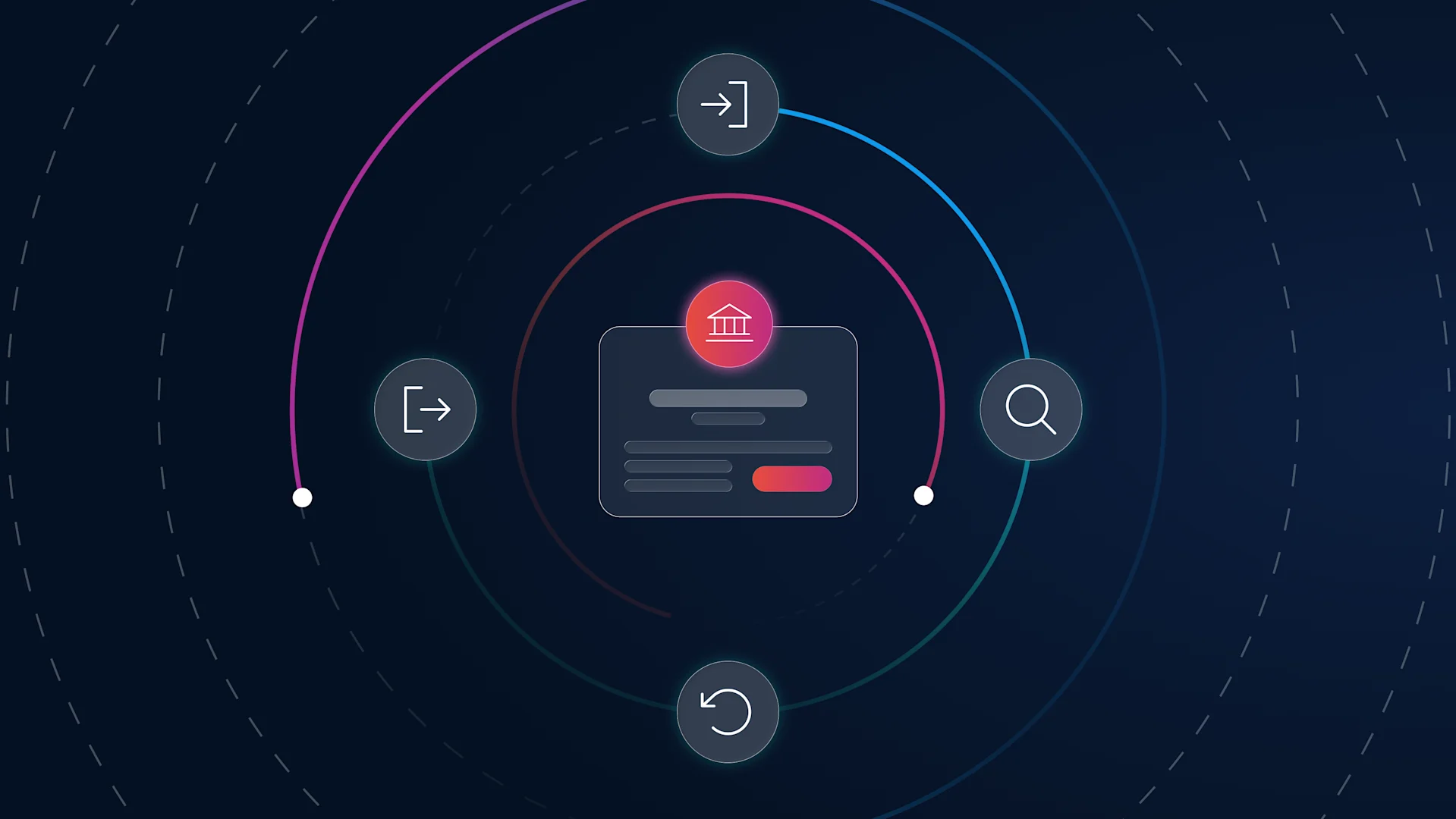
Client lifecycle management in banking covers far more than getting a client through onboarding. Once the relationship is active, the bank still has to respond to changes in risk, ownership, product use, and regulatory status as they happen.
That ongoing work can be difficult to manage when information sits across different systems or a case moves outside the standard process. Even onboarding alone can be demanding, with reports that bringing a new corporate banking client onboard can take up to 100 days.
This guide looks at how Contract Lifecycle Management (CLM) supports the relationship beyond account opening, from ongoing Know Your Customer (KYC) and review activity through to exception handling and client offboarding. It also looks at where traditional approaches tend to struggle, and how case management can help banks keep the wider client context intact as circumstances change.
Corporate banking onboarding can take up to 100 days, according to McKinsey, showing how costly fragmented onboarding and due diligence processes can become.
Client lifecycle management does not end at account opening. FATF expects financial institutions to conduct ongoing due diligence throughout the business relationship, including keeping customer information relevant and up to date.
Effective CLM needs to account for changes such as beneficial ownership updates, risk escalations and triggered reviews.
Banks need to keep client context available as work moves between systems, automated processes, exceptions, and human review.
Client lifecycle management in banking is the way a bank manages its relationship with a client over time. Onboarding is where that relationship usually begins, with KYC, or Know Your Business (KYB) checks, account setup and the initial client risk assessment. From there, the picture can change quite quickly.
A corporate client might add a new product, change its ownership structure or move into a different risk category. Any of those changes can create more work for the bank. Reviews may need to be reopened, new information gathered or another team brought into the case.
This is why client onboarding in banking is only one part of the picture. New client onboarding automation in banking can reduce manual work around entity verification, KYC and account opening, but the relationship still needs to be managed once the client becomes active.
The Financial Action Task Force’s (FATF) Recommendation 10 also makes clear that due diligence continues throughout the business relationship, including keeping information on the customer and beneficial owner up to date.
CLM gives the bank a way to manage that ongoing activity without losing sight of what has already happened in the relationship.
A banking relationship rarely follows one neat path from onboarding to closure. The client may take on new products, their ownership may change, or their risk profile may look very different a few years into the relationship. CLM needs to account for that movement across the full lifecycle.
Before a banking relationship can move forward, the bank needs enough information to understand who it is dealing with and the level of risk involved. For a corporate client, that can involve KYB and entity verification, tracing beneficial ownership, Anti-Money Laundering (AML) screening and building an initial risk profile.
For corporate clients in particular, ownership structures can add a lot of complexity. FATF Recommendation 10 requires financial institutions to identify beneficial owners and understand the ownership and control structure of legal persons and arrangements.
A lower-risk case may be suitable for greater Straight-Through Processing (STP). More complex structures or higher-risk findings can send the same onboarding journey down a different route, with further evidence or Enhanced Due Diligence (EDD) required before the account is opened.
The client record cannot just sit unchanged after onboarding. A business may restructure, its ownership may shift, or new transaction activity may alter the level of risk the bank is dealing with.
FATF expects customer due diligence information to be kept current and transactions to be monitored throughout the relationship. This is part of the wider financial crime compliance workload, particularly where a client’s risk profile changes after onboarding.
Perpetual KYC is one way of keeping that information current. Instead of waiting for the next scheduled review, new information can prompt the bank to look at the client again sooner. The exact trigger points will depend on the bank’s own risk framework.
Some reviews are scheduled in advance. Others happen because something has changed.
A change in beneficial ownership might be enough to reopen the case. A new Politically Exposed Person (PEP) match could do the same. In other situations, the trigger may come from transaction monitoring, a sanctions signal or a new product request.
The Basel Committee’s Core Principles expect banks to carry out risk-based reviews and ongoing transaction monitoring. They also address the need for enhanced due diligence when an existing relationship becomes high risk.
For CLM, that matters because an event-driven review may need to begin midway through an otherwise established relationship. The case may move to different reviewers or require additional checks while the bank maintains the history behind the original client risk assessment.
Client offboarding still creates work. Accounts or products may need to be closed, outstanding matters dealt with, and records retained for the required period. FATF also covers situations where a bank may need to end a relationship because it cannot complete the required due diligence.
The shape of the lifecycle will differ across banking segments. A retail bank may deal with large volumes of relatively standardized cases, whereas private banking relationships can involve more complicated ownership structures and ongoing review requirements.
CLM tends to struggle when client information and lifecycle activity are spread across too many places. The onboarding process itself might work well, but problems start to show once something changes later in the relationship.
The client record is rarely all in one place. One team may be looking at KYC or KYB data, another at screening results, while supporting documents live somewhere else entirely. Staff can end up pulling information together manually before they are even able to make a decision.
A change later in the relationship can create a whole new chain of work. A new beneficial owner, product request, or change in risk may bring in different reviewers and extra checks. If that activity is handled separately, the link back to the original client history can become harder to follow.
Exceptions often end up being handled manually. Email threads, spreadsheets and ad hoc handoffs can appear when a case does not follow the usual route. That makes exception handling harder to track and can weaken the audit trail.
Legacy case systems can make the problem worse. Where systems need extensive manual customization or do not share information easily, staff are often left filling the gaps themselves.
The effect is also visible during onboarding. McKinsey found that KYC due diligence and account opening can account for more than 40% of the time corporate customers spend onboarding. Its research also highlighted banks without a single digital repository for customer information, as well as case systems that still required significant manual customization.
For banks, that affects more than regulatory compliance. Slow or fragmented onboarding can also affect the client experience and delay time to revenue.
The challenge is that not every part of a client lifecycle behaves the same way. Some activities are predictable and repeatable, while others depend on new information, changing risk or human judgment. Managing the full relationship therefore requires more than a single linear workflow.
Flowable’s Agentic Case Platform combines three process standards to support these different types of work:
Standard | Best suited to | Banking examples |
BPMN | Structured, predictable processes | Document collection, screening, defined approval sequences |
CMMN | Event-driven or less predictable work | Risk investigations, complex ownership reviews, triggered escalations |
DMN | Explicit decision logic and business rules | Risk classification, eligibility decisions, routing rules |
These models can work together rather than forcing every activity into the same workflow. Flowable’s CMMN capabilities allow cases to initiate processes and other sub-cases, helping banks keep the wider client context available while individual events follow their own governed paths.
Say an existing client applies for a loan. That application can be handled within the wider client case, with its own documents and approval route, while still drawing on information the bank already holds about the relationship.
Six months later, the ownership structure changed. The bank may need to look at the client again, but it already has the previous checks and decisions available. The new review can be added to the same case history instead of being treated as a separate piece of work.
AI agents for banking take on routine activity around that process, such as reviewing documents or helping with monitoring. Where something needs a person to make the call, the case can move to the appropriate team and keep a record of the activity that led up to it.
Flowable is already used for this type of work by a Swiss tier-1 bank. More than 3,000 users work with the system across several booking centers. Its use cases include onboarding for PEPs as well as Swiss corporate and institutional clients.
That use case also sits within the Swiss regulatory context. FINMA requires financial intermediaries to identify beneficial owners and apply closer scrutiny where a relationship carries higher risk, including relationships involving politically exposed persons.
Before adopting client lifecycle management software, it helps to understand where the current process is actually causing trouble. That might be information sitting in different systems, reviews getting stuck between teams, or staff having to step outside the normal process when something unusual happens.
Some of that work may be a good fit for banking process automation. Document collection and screening, for example, are often more predictable than a case involving a new beneficial owner or an unexpected change in risk.
Banks also need to decide what should trigger another look at an existing client. A periodic review date is one obvious example, but a new PEP or sanctions signal, a change in ownership or a shift in the client’s risk profile could all lead to further checks.
Whatever technology is used, staff should still be able to follow the history of the relationship as work moves between systems and teams.
The measures used to judge improvement will depend on the process. Review delays, manual rework and exception volumes can expose operational problems, while time to revenue and onboarding abandonment are useful indicators of how the onboarding experience is working for clients.
Client lifecycle management in banking covers the relationship with a client from onboarding through to offboarding. That includes due diligence, monitoring, reviews, changes in ownership or risk, and new activity that develops over time. The aim is to keep that work connected as the relationship changes.
Onboarding deals with the early stages of the relationship, such as KYC or KYB, risk assessment and account opening. CLM continues once the client is active. It covers further reviews, changes in circumstances and exceptions that can arise over the course of the relationship.
Perpetual KYC, or pKYC, is an approach to keeping customer information and risk assessments current on an ongoing basis. Relevant events or risk signals can prompt additional checks between scheduled reviews. The way this works in practice will depend on the bank, its risk model and its technology.
CLM helps keep unusual cases tied back to the wider client history. If something needs extra review, the team picking it up can see what has already happened instead of starting again from scratch. The same applies during client offboarding, where closure activity and records still need to be handled in a controlled way.
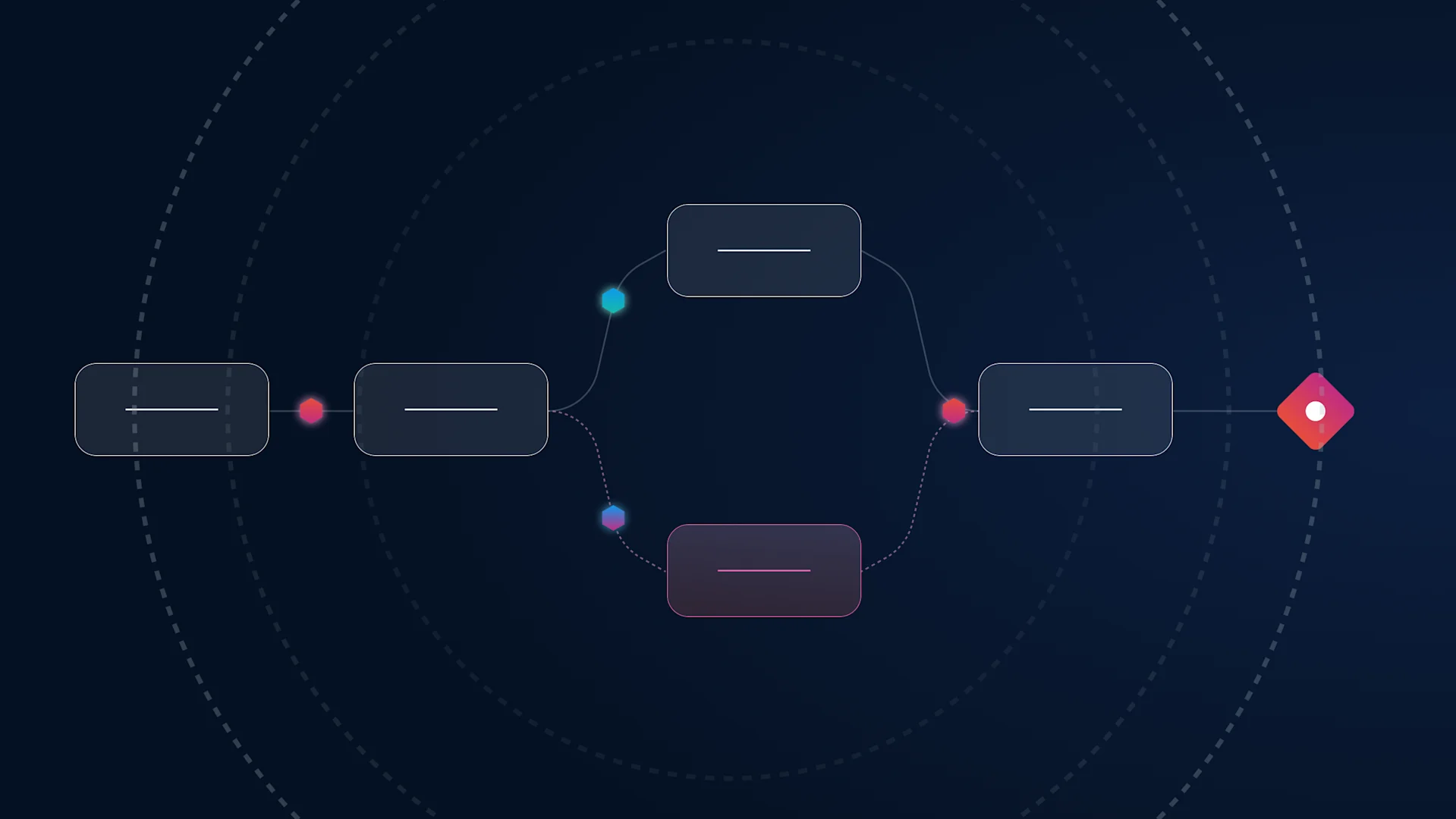
n agentic workflow is more than a multi-agent diagram. See what the standard patterns omit once workflows meet exceptions, oversight, and audit requirements. Primary keyword: agentic workflow
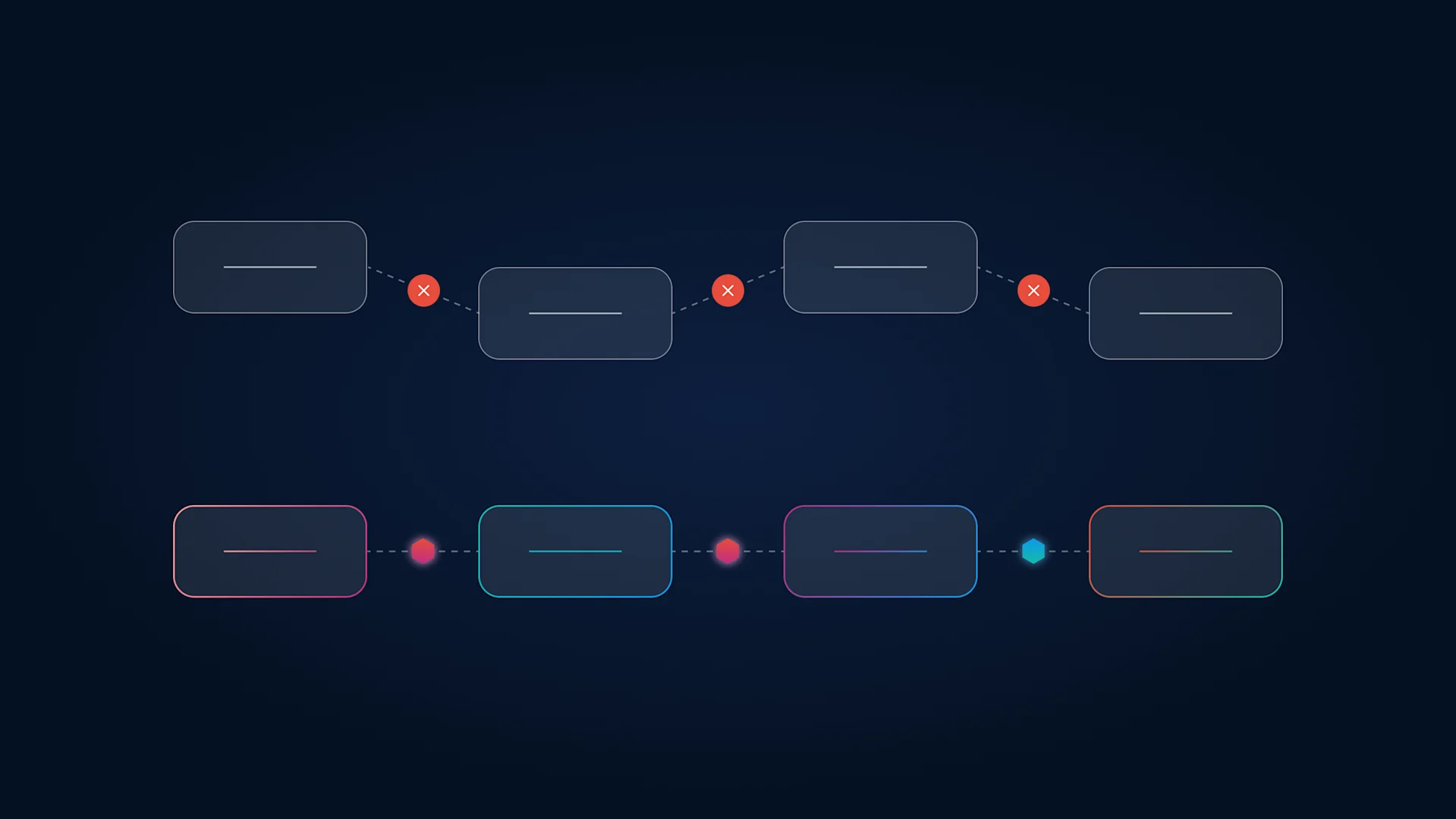
Automating single functions leaves the process broken at the handoffs. See why end-to-end orchestration beats function-by-function financial process automation.
A criteria-led framework for evaluating workflow orchestration tools, covering open standards, governance, exceptions, and lock-in, not another ranked listicle. Keywords: workflow orchestration tools