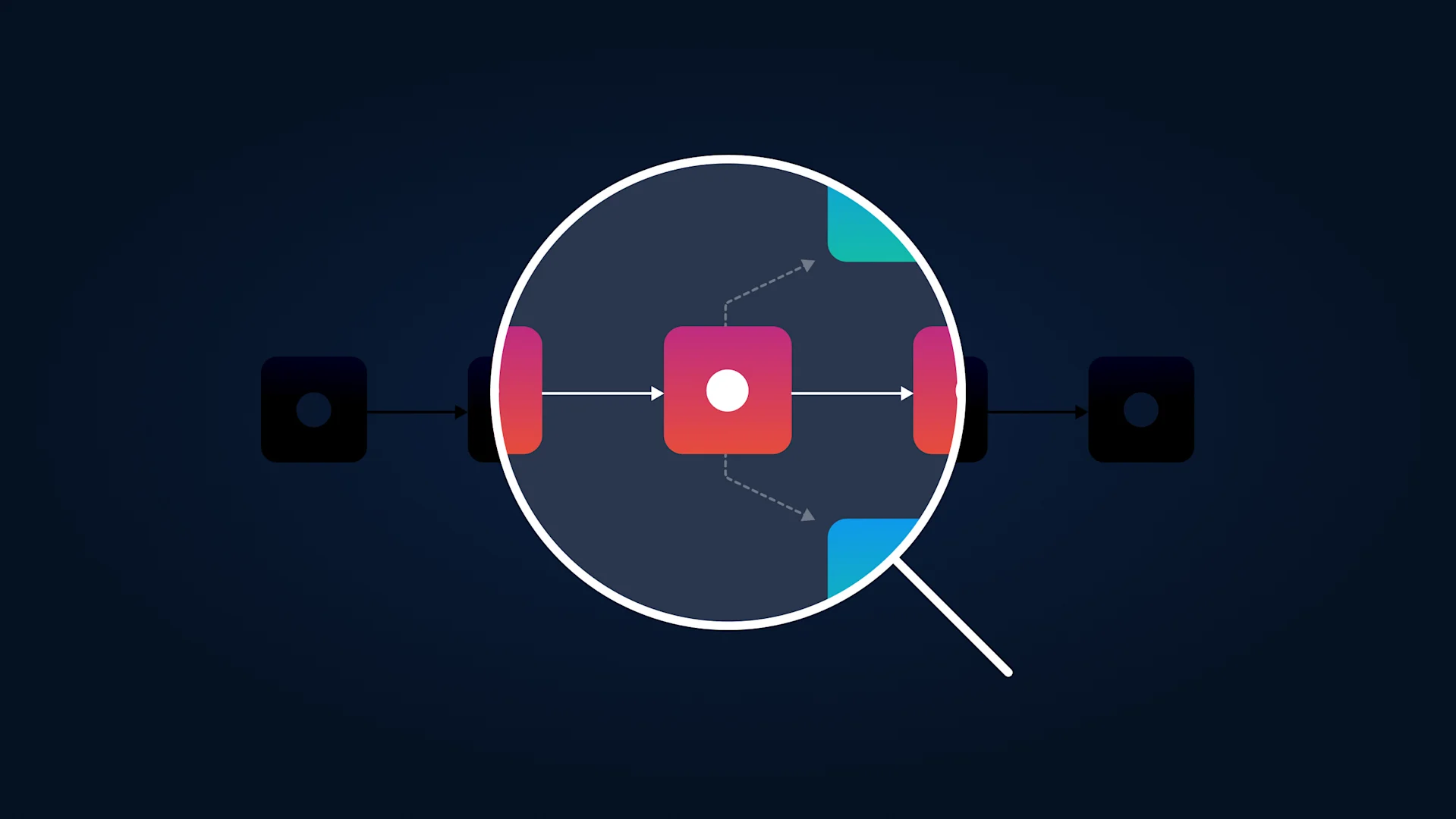
Process intelligence gives you an evidence-based picture of how work actually flows through your organization, where it slows down, where it breaks, and where the biggest opportunities for improvement are hiding. Knowing you need better process visibility and knowing how to act on it are two different things.
Most organizations have a sense that certain processes are slower, more error-prone, or more costly than they should be, but without hard evidence, improvement efforts tend to rely on assumptions, stakeholder opinions, and educated guesses. The result is change that doesn't stick, or investment that targets the wrong problems entirely.
Process intelligence changes that. It gives you an accurate, evidence-based picture of how work actually flows through your organization, including where it slows down, where it breaks, and where the biggest opportunities for improvement are. More importantly, it gives you a path from insight to action.
This guide explains what process intelligence is, how it works, and how to go beyond insights and translate them into real operational change.
Process intelligence is the capability to discover, monitor, analyze, and optimize how business processes actually operate, rather than how you think they operate.
Most organizations document processes in a flowchart, a standard operating procedure, or a process map in a slide deck. Process intelligence reveals the gap between the documented version and what's actually happening in your systems. It answers questions like: Where do approvals stall? Which process variants take twice as long? Where do exceptions get handled manually because the official process doesn't account for them?
Process intelligence combines process mining, real-time monitoring, and advanced analytics to point you toward where to improve, so you can redesign underperforming processes, eliminate bottlenecks, and build automation that targets the right problems.
Process intelligence works across three connected capabilities: process mining, real-time monitoring, and analytics. Together, these three capabilities give you a more complete picture of how your operations perform.
Process mining extracts event log data from your enterprise systems (your ERP, CRM, ITSM, or any system that records timestamped activity) and reconstructs the actual flow of work. This creates a complete picture of every path a process takes, including the variants you didn't know existed. The detours, workarounds, and unofficial steps that never made it into the documented process are usually where performance and compliance problems are hiding.
For example, in a loan origination process, you might discover that 30% of applications take a detour through a manual verification step that isn't in the official process, adding days to approval times and creating compliance risk. With that evidence in hand, you can redesign the process to eliminate the detour, automate the verification step, or flag it for compliance review, instead of continuing to work around a problem you couldn't clearly see.
Process monitoring tracks active cases and workflows as they execute, flagging deviations, SLA breaches, and bottlenecks the moment they emerge.
By the time a monthly operations report surfaces a process delay, the downstream impact has already set in, such as an SLA breach, a missed payment window, or a compliance deadline slips without anyone noticing. Real-time visibility means you can intervene the moment a case falls behind, before a delayed shipment becomes a missed contract obligation or a stalled approval triggers a regulatory flag.
Analytics is the layer that sits on top of monitoring and that helps you surface patterns across thousands of cases. Where monitoring tells you a specific case is running late, analytics tells you that cases of a particular type are consistently late, which step is the recurring bottleneck, and how often a specific team or system is the cause.
Analytics moves process intelligence from observation to insight, giving you the evidence you need to prioritize improvement efforts and make the case for change.
Process intelligence gives you something most organizations lack: an accurate, evidence-based picture of how work actually flows. Here's what that visibility unlocks.
See what's actually happening. Not the documented process — the real one, with all its variants, exceptions, and workarounds.
Prioritize improvements with evidence. Instead of relying on gut feel or the loudest stakeholder in the room, make decisions based on data showing where time, money, and resources are being lost.
Reduce operational risk. Real-time monitoring surfaces compliance gaps and SLA breaches before they escalate. In regulated industries (financial services, healthcare and insurance), compliance failures result in regulatory fines, reputational damage, and in some cases, operational restrictions.
Build a feedback loop. Process intelligence isn't a one-time audit. Execution data continuously feeds back into your analytics, so every improvement cycle gives you better data for the next one. Over time, that means your optimization efforts get sharper since you're building on an increasingly accurate picture of how your operations actually perform.
Onboarding is often where customer experience succeeds or fails. Process intelligence can reveal exactly where onboarding stalls, such as document collection, identity verification, or system provisioning, and how long each step actually takes versus how long it should. Organizations that fix the broken elements process intelligence surfaces can cut onboarding cycle times significantly, reducing early customer drop-off in the process.
The order-to-cash process covers everything from the moment a customer places an order to the moment payment is collected, touching multiple systems and teams, including order management, fulfillment, invoicing, and collections. Process intelligence maps the actual flow across all of them, surfacing where invoices get stuck, where payment terms are consistently missed, and where manual workarounds are eating into margins. For high-volume operations, even a small reduction in cycle time translates directly into working capital improvement.
Insurance claims processing is inherently complex, but process intelligence can separate inherent complexity from operational inefficiency. It identifies which claim types take the longest, where adjusters are creating manual exceptions, and which handoffs between systems cause the most delays. Those insights help you design targeted automation and process changes that reduce processing times while maintaining accuracy and control.
In regulated industries like financial services, insurance, and healthcare, process intelligence helps provide the audit trail and real-time visibility that compliance teams need. Instead of reconstructing what happened after a regulatory inquiry, you have a continuous record of how processes were executed, who made which decisions, and where exceptions occurred, so your compliance team spends less time on incident response and more time on the work that actually moves the business forward.
Most guides stop at the insight because surfacing what's wrong is the easier part. But insights sitting in a dashboard don't fix broken processes or reduce cycle times. Without a clear path from finding to action, organizations end up with a detailed picture of their problems and no systematic way to solve them. Here's how to take what process intelligence surfaces and turn it into working, automated solutions.
Your process intelligence has identified the bottlenecks, variants, and improvement opportunities. Now translate those findings into concrete requirements. Map each problem to a process decision:
Steps that are consistently slow due to manual input → candidates for automation
Decision points that produce inconsistent outcomes → capture the logic in DMN rules
Processes that frequently deviate based on case complexity → case management approach rather than a rigid workflow
Document those decisions before you start modeling. This way, you won’t start rebuilding a slightly better version of the same broken process. Flowable's agentic case platform lets business analysts, not just developers, turn requirements directly into executable process models. That keeps the people who understand the business problem closest to the solution, reducing translation errors and speeding up iteration when requirements change.
With your process requirements clear, you can design the improved process. For most enterprises, that means handling more than one type of scenario: a standard path that follows predictable steps, decision points where rules determine the outcome, and occasional cases that require flexible, judgment-based handling. Without an integrated platform, that typically means maintaining separate tools for each: a process modeler for structured workflows, a rules engine for decision logic, and a case management system for dynamic scenarios. Each tool has its own modeling environment, its own deployment pipeline, and its own way of handling integrations. Keeping them in sync as processes evolve adds overhead and creates points of failure.
Flowable Design supports all three in a single modeling environment: Business Process Model and Notation (BPMN) for process flows, Decision Model and Notation (DMN) for decision logic, and Case Management Model and Notation (CMMN) for dynamic case management. A customer complaint process, for example, might follow a structured flow for standard cases, apply DMN rules to determine compensation thresholds, and switch to a case model when a complaint escalates.
Getting your new process to run reliably across teams, systems, and edge cases is where most implementations fall short. Deployment means connecting your workflow to the systems it depends on, configuring how tasks get assigned and routed, defining what happens when exceptions occur, and ensuring the whole thing holds up under real operational load. Without a dedicated orchestration layer, that coordination typically falls to custom code and manual integration work that's slow to build and fragile to maintain.
Flowable provides that orchestration layer for you. The BPMN, CMMN, and DMN engines execute your process models as live workflows, routing tasks to the right people or systems, applying decision logic at the right points, and managing dynamic cases where the path forward isn't predetermined.
Where a decision requires human judgment for an approval, exception review, or compliance sign-off, that human step is built into the workflow. It's part of the process, with full visibility and a complete audit trail.
Once your optimized process is running, you need visibility into whether it's performing as intended because volumes change, edge cases emerge, and what worked at launch may develop new bottlenecks as conditions evolve. Without active monitoring, those changes are invisible until they've already affected customers, SLAs, or compliance obligations.
Track cycle times against targets, case throughput, task completion rates, SLA adherence, and exception frequency. When those metrics drift, you need to know which step is the cause — not just that overall performance has declined.
Flowable gives operations teams real-time visibility into active cases, process performance, and emerging bottlenecks, so you can catch problems early and validate that your improvements are delivering results.
Continuous improvement only works if you close the loop between execution and analysis. After each improvement cycle, feed your process performance data back into your analytics environment — cycle times, exception rates, throughput, SLA adherence — and compare it to your pre-improvement baseline. That comparison tells you whether your changes had the intended effect, where new bottlenecks have emerged, and what to prioritize in the next round of optimization.
Every time a workflow runs in Flowable, it records the completed steps, how long each took, and where delays occurred. That execution data feeds directly back into your analytics, giving you a continuously updated picture of process performance without manual data collection or separate reporting tools. Over time, that data compounds, so your baseline gets more accurate, your bottleneck identification gets sharper, and your improvement efforts get faster.
The real value of process intelligence comes when you use what you've discovered to redesign and automate the process, and that's where many organizations get stuck. Their process mining tool tells them what's broken, but doesn't help them fix it.
Flowable closes that gap. It brings process intelligence and process execution together in a single platform so you can discover what's broken and fix it, deploy it, and keep improving it.
Sign up for a free trial or schedule a demo with our team.
Process mining is the starting point of process intelligence. It's the technique that reconstructs actual process flows from event log data. Process intelligence is the broader capability that combines mining with real-time monitoring, analytics, and the ability to act on what you find.
Business intelligence focuses on business outcomes, such as revenue, costs, and customer metrics. Process intelligence focuses on the operational processes that drive those business outcomes. They're complementary: process intelligence explains the operational reasons behind the numbers your BI tools surface.
Process intelligence works from event logs — timestamped records of activities within your enterprise systems. Most ERP, CRM, ITSM, and BPM systems automatically generate this data. The quality and completeness of your event log data directly affects the accuracy of your process analysis.
Any industry with complex, high-volume, or regulated processes stands to benefit. Financial services, insurance, healthcare, and manufacturing are particularly strong fits — process complexity is high, compliance requirements are significant, and the cost of operational inefficiency is measurable.

Business process management software covers very different tools in 2026. See how the category shifted towards BOAT and what buyers should evaluate.
Client lifecycle management in banking goes beyond onboarding. See how case management keeps client context intact through KYC, reviews and offboarding.
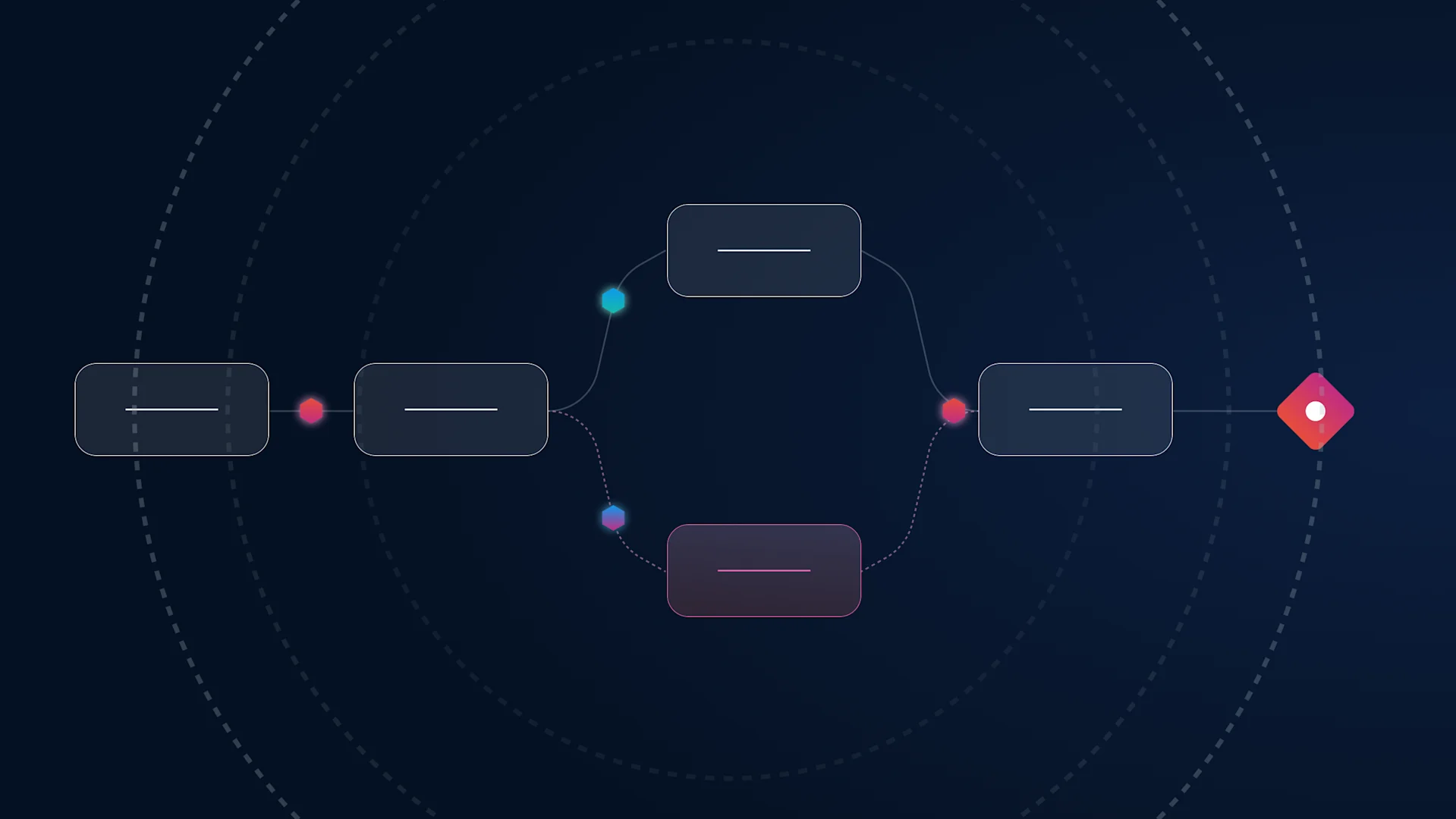
n agentic workflow is more than a multi-agent diagram. See what the standard patterns omit once workflows meet exceptions, oversight, and audit requirements. Primary keyword: agentic workflow