
Managing documents is crucial for running a business. But for many enterprises today the scale and complexity of document management are overwhelming.
Teams must manage high volumes of contracts, forms, emails, reports, and raw data across a range of disconnected systems. Manual information retrieval and entry, limited tracking, and poor collaboration support break up workflows. Which slows operations and raises risks. Instead of supporting service delivery, document management often becomes a burden.
Modern enterprises need advanced document software. They require intelligent workflow automation that captures, organizes, and activates information within larger business processes.
Document workflow software bridges this gap. It offers fresh ways to manage content efficiently at scale. When you pair case-by-case on-demand document data pull and generation, with automation, and AI, information flows easily. Decisions are made quicker, and employees can focus on more valuable work driven by efficiency.
Controlling document intake is essential for businesses facing growing volumes of incoming information. Without a system to organize incoming content from emails, online forms, internal portals, and customer chats, important information is stuck in inboxes and buried in different places.
Enterprise-ready solutions centralize document intake into one place. Flowable takes this a step further with dynamic, automated, case-by-case document management. It’s case management organizes workflows by grouping everything linked to a specific business process to an orchestration supported folder. Which provides the automated retrieval of required data, the generation of next step documents and customer communication, as well as structured data storage. An automated case brings your documents, tasks, decisions, people, and timelines together into a living file that evolves and actions steps as the work progresses. Teams work inside the case with everything they need available in one place, updated in real-time.
This means documents can be captured automatically, structured data is extracted, and content links directly to each relevant business case. This method streamlines intake. It enables organizations to apply automation and artificial intelligence for faster, smarter document handling.
Many business processes require the creation of personalized documents, such as contracts, approval letters, or compliance reports. But manual assembly of these documents takes time and invites inconsistency, especially when large volumes need generating.
Automated generation of PDF and Word documents during a business process or case pulls details like customer info, contract terms, and transaction data straight from the business case or external systems. Dynamic document generation ensures every output reflects real-time information without manual updates.
Embedding document generation into workflows, enterprises can manage high volumes of customized communications without increasing administrative load or risking quality.
Capturing and generating documents are only parts of the document lifecycle. Enterprises must also store and classify content in a way that supports access, governance, and future use.
Flexible storage options ensure document repositories can grow with the business, whether through secure cloud services or integration with established content management systems like SharePoint or Box.
Flowable’s platforms helps businesses move beyond the static folders and manual tagging of yesteryear. It allows the use of automatic categorization based on metadata, predefined rules, or AI-driven classification. This allows intelligent organization of content, such as contracts, invoices, or customer communications, making it easy to retrieve or audit later.
The saying goes, “the devil is in the detail,” and it applies to document workflows too. The real value lies in the data contained within documents. Automatically extracting data such as names, amounts, dates, and transaction details allows enterprises to speed up business processes and make better decisions. This extracted data lives with the document inside the case, where it remains linked to other related tasks, decisions, and history.
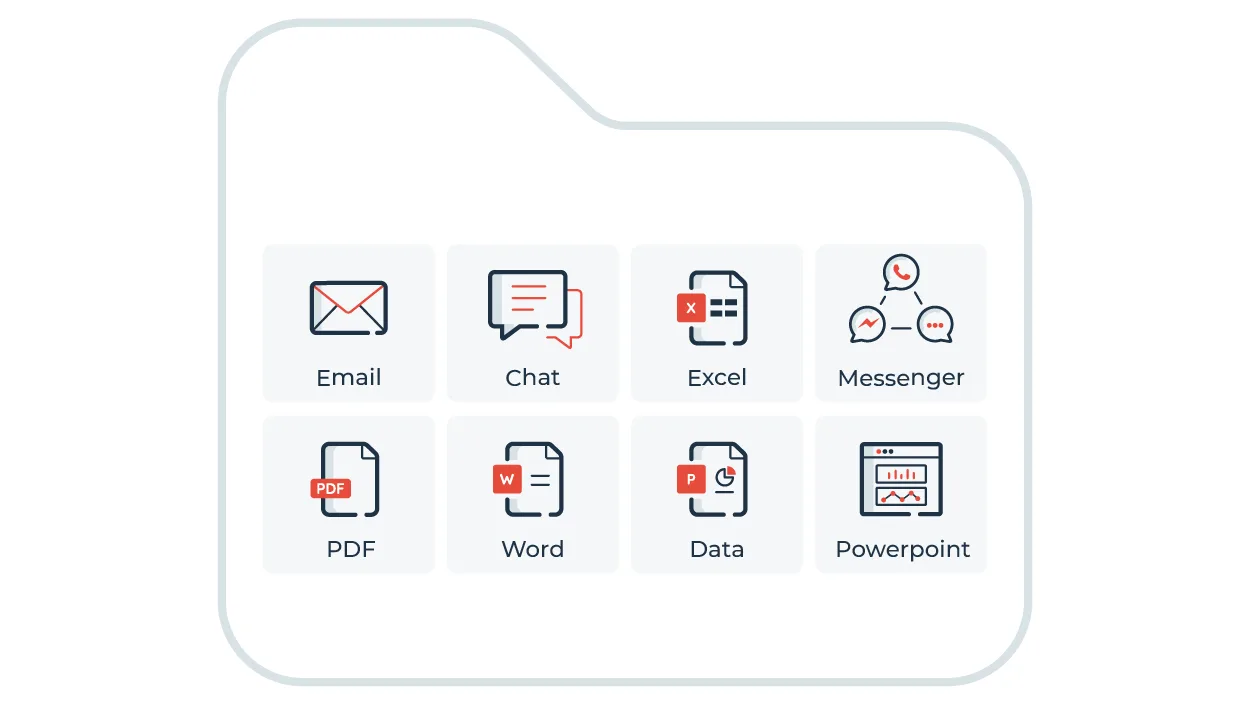

This model becomes especially powerful in complex business scenarios.
In customer onboarding, all submitted forms, contracts, and communications are captured within the onboarding case, giving service teams immediate access to critical information throughout the process.
In insurance claims management, photographs, policy documents, and adjuster notes are stored within the claim case, creating a complete, traceable history that speeds up settlement and ensures compliance.
In regulatory audit preparation, required filings, supporting evidence, and related correspondence are grouped within the audit case, simplifying oversight and reducing audit preparation time.
Better access to organized information also leads to faster, more confident decision-making. When documents are intelligently linked to business cases, teams no longer waste time searching for files and gain real-time visibility into document versions, related tasks, and extracted data. AI assists further by summarizing large documents or surfacing key facts, helping decision-makers focus on what matters.
By embedding documents and data within cases, enterprises create a working environment where every action backed by context, accuracy, and up-to-date information.
Automated document workflows boost processing speed and transform how employees engage with their work. By automating repetitive activities such as document filing and data re-entry, employees can focus on higher-value tasks. Knowledge workers can apply judgment, creativity, and strategic thinking to complex cases instead of getting bogged down in administrative tasks.
Automation enhances the human expertise a business has in place. By removing operational bottlenecks, organizations enable teams to engage more deeply with customers, analyze information more thoughtfully, and innovate service delivery.
Organizations that view automation as a catalyst for employee growth rather than a replacement strategy build stronger, more resilient teams. Today, when speed and adaptability matter more than ever, empowering people through more intelligent document workflows becomes a direct path to competitive advantage.
AI is rapidly enhancing the capabilities of document workflows, helping to understand, summarize, translate, and even generate content with automation directly within workflows to assist business processes.
Flowable AI Studio integrates top AI services, like OpenAI, Claude, SharePoint, and Gemini, to empower these capabilities — and allows you to connect, build, and customize AI agents to perform document processing too. For example, users can automatically summarize lengthy documents, translate content into different languages, or query a document to extract specific insights without reading every page.
With AI embedded in workflows, intelligent analysis and content generation happen naturally as part of everyday processes, and teams can act sooner and with more accurate information.
The future of document management is about orchestrating information, processes, and decisions into connected, intelligent systems.
Platforms like Flowable combine document intake, automated content generation, dynamic case management, structured data extraction, and AI-assisted insight generation into one environment to transform document management from a background task to a strategic advantage.
Enterprises that rethink their approach to intelligent document workflows today are positioning themselves for faster service delivery, smarter decision-making, and stronger business outcomes in the future.

Case management vs BPM. How to choose between case management vs business process management, and what to do when the answer is both.

Human-on-the-loop or Human-in-the-loop automation? How to choose an AI oversight model using reversibility, accountability, latency, and auditability

Find out how governed AI automation allows regulated industries make AI process governance provable, auditable, and enforceable.