An agentic case platform coordinates AI agents, people, and rule-based processes within the same case, so the work keeps its context, controls, and history as it progresses.
An AI agent is software that can interpret information, make decisions, and take action toward a goal. Here, “agentic” means the AI can act within the case, rather than only provide an answer or recommendation.
The case might be an application, claim, investigation, or customer request. As the work moves forward, the platform keeps the history of the case, the rules that apply, and its current status in one place. That means AI can take on parts of the work without becoming disconnected from the people and controls around it.
What is an agentic case platform?
Each governed case is the central record of the platform. It stays active until the work is finished and holds the information, permissions, rules, current stage, and history that determine what can happen next.
AI agents take part in that case alongside people, connected systems, predefined processes, and business rules. They do not operate as a separate system with a detached view of the work.
The agentic layer is one part of the platform. The governed case is the structure that holds the work together, providing the continuity and control needed as circumstances change.
How an agentic case platform works
The case as the container
The case holds the working context. That can include case information, permissions, predefined processes, decisions, human tasks, AI-agent activity, and the record of what has already taken place.
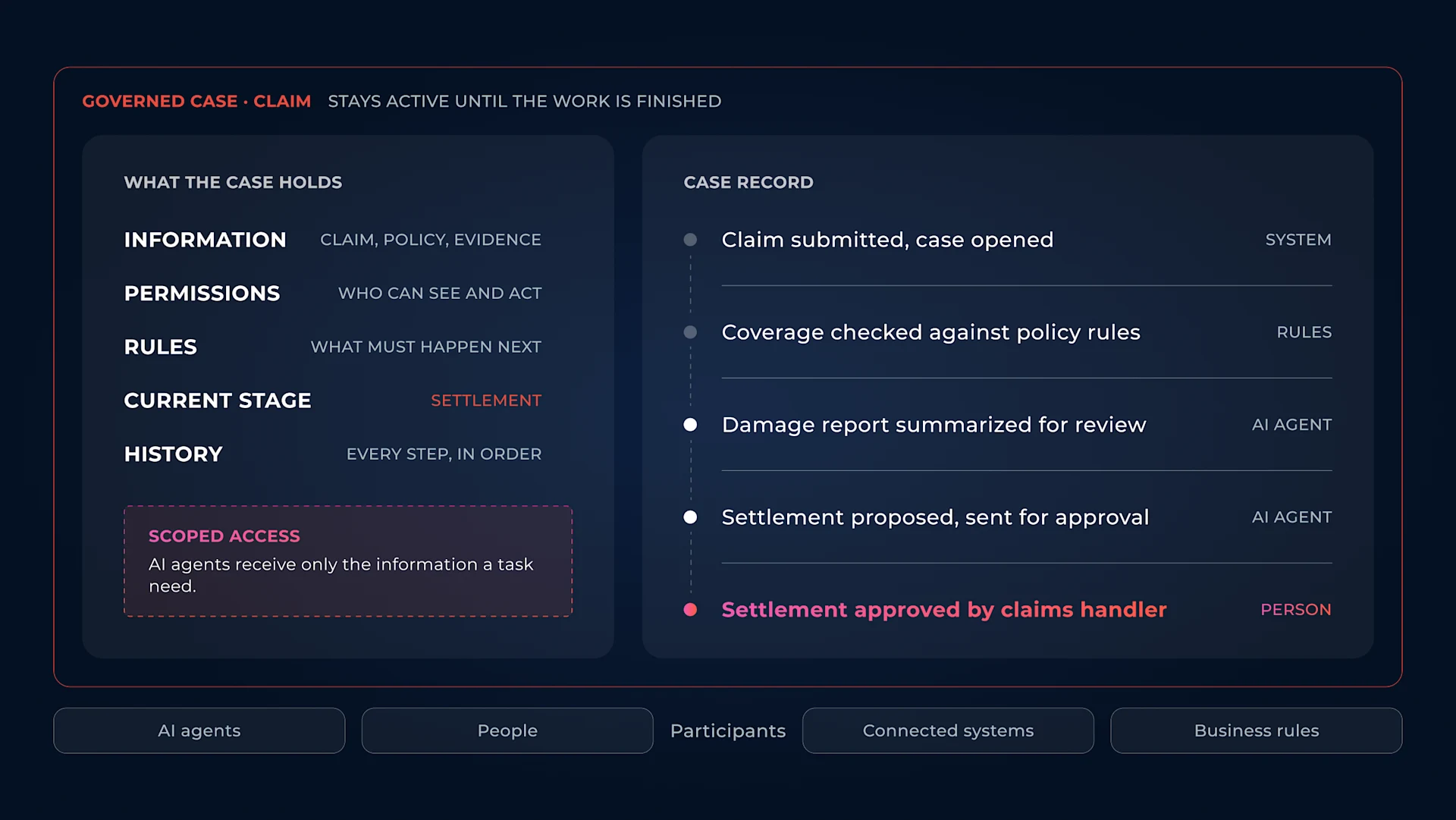

Governed AI agents can receive only the information needed for a particular task and operate within clear limits.
What the agent does becomes part of the same case record as human and system activity, so teams can review the wider sequence rather than a collection of disconnected AI actions.
Open standards and governed agents
Using open standards means the platform is not tied to one vendor’s way of modeling work. Buyers can see how cases, processes, and decisions are represented and compare that approach more easily across different platforms.
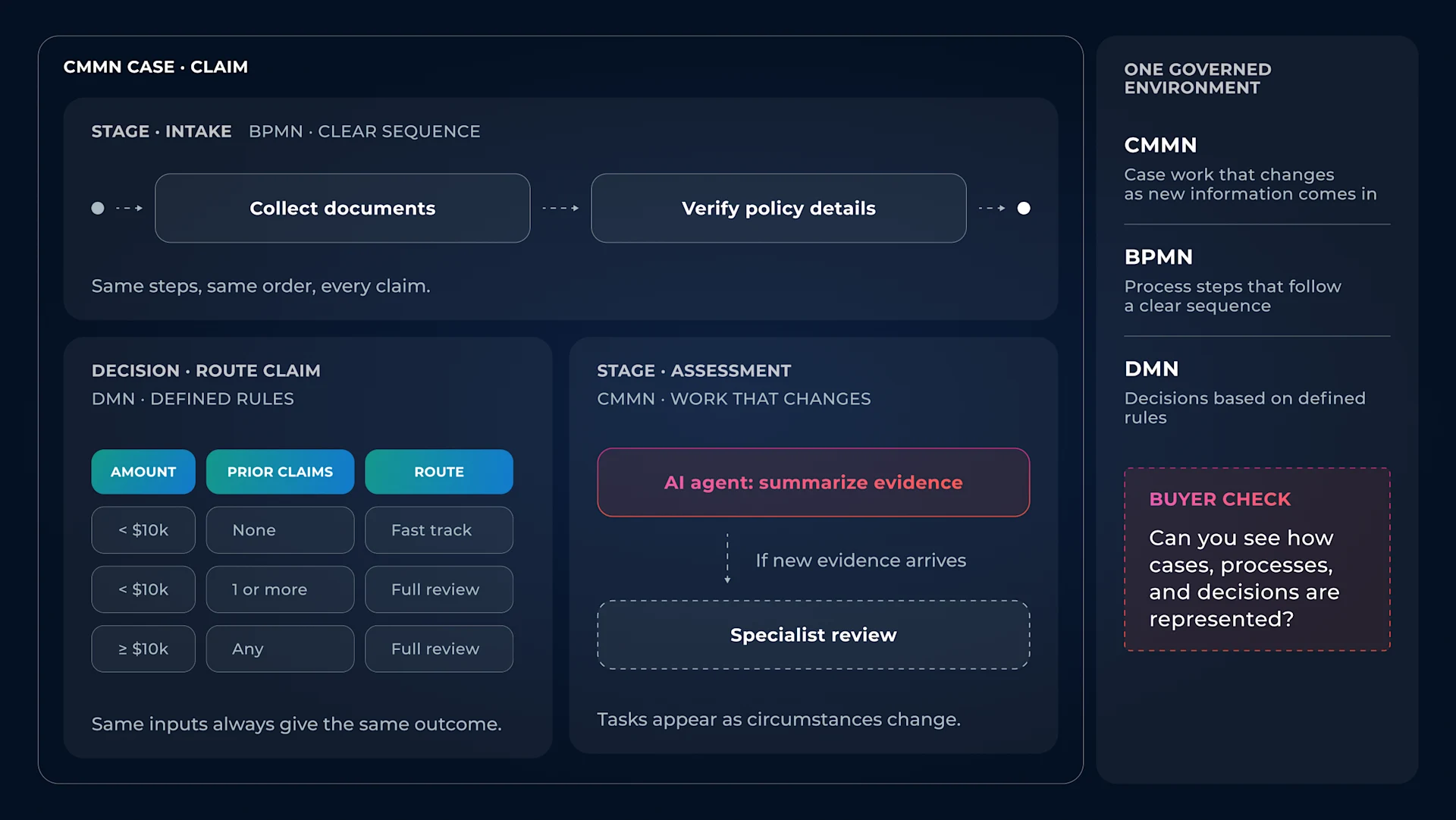
Case Management Model and Notation (CMMN) suits case work that can change as new information comes in. Business Process Model and Notation (BPMN) is better suited to process steps that follow a clearer sequence, while Decision Model and Notation (DMN) is used for decisions based on defined rules.
Together, they let different types of work sit within the same governed environment without forcing every case into one fixed process.
Agentic case platform vs. agentic platform vs. case management
The terminology overlaps, but the categories are not interchangeable.
Category | What it does | Key distinction |
Agentic platform | Hosts, routes, or coordinates AI agents | Does not necessarily provide a case that stays active and retains its information |
Case management platform | Coordinates case-based work | Does not necessarily include AI agents as built-in participants |
Task automation | Automates predefined individual tasks | Typically focused on predefined tasks rather than managing the wider case |
Agentic case platform | Places governed AI agents inside a persistent case | Combines case context, agents, people, controls, and auditability |
A case management platform keeps case information, tasks, and decisions together. An agentic case platform adds governed AI agents to that same case, alongside the people, rules, and processes already involved in the work.
Agentic case management describes the way that work is coordinated as circumstances develop. An agentic case platform is the technology that supports that operating model.
Why it matters for high-stakes, regulated work
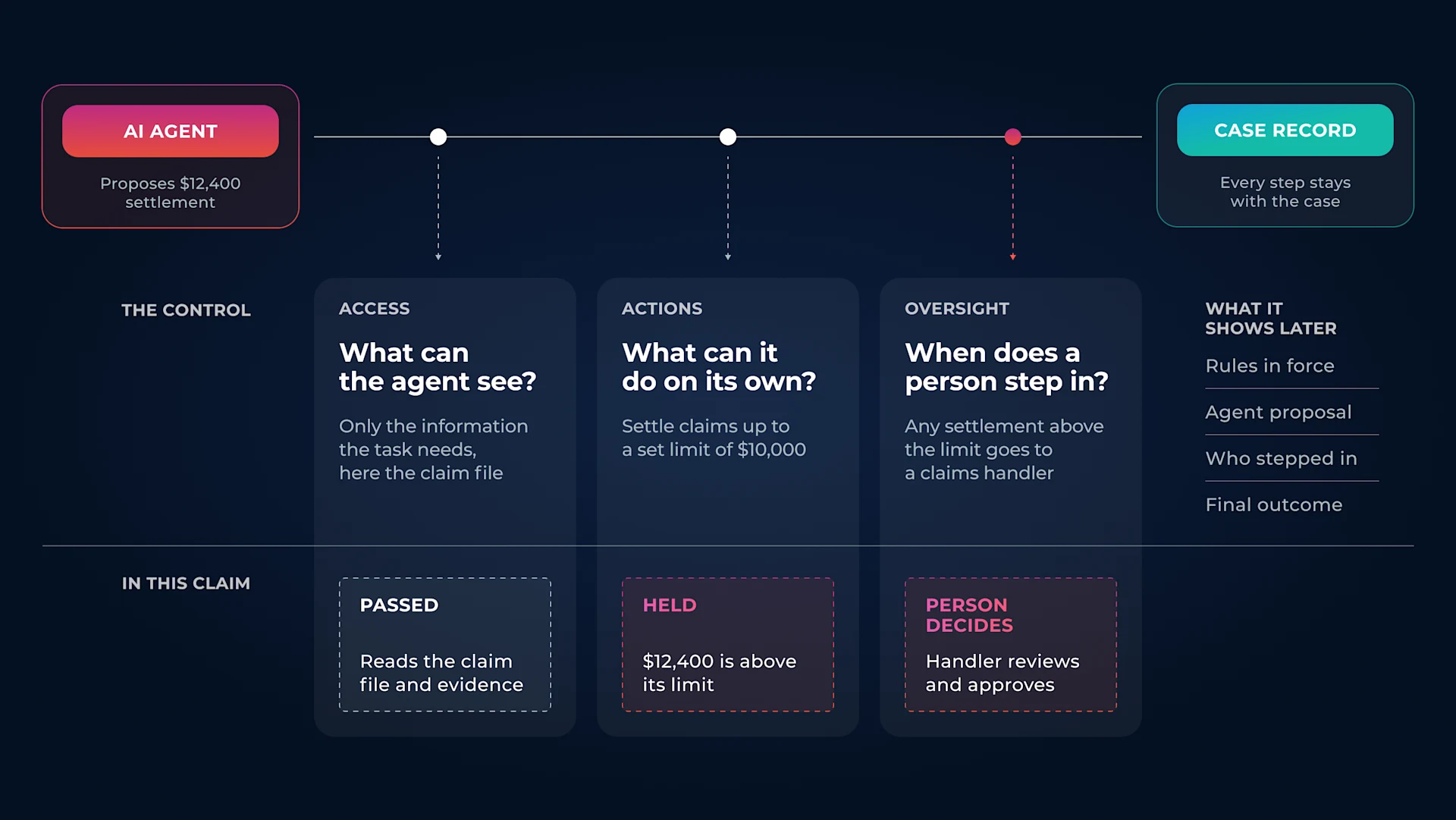
Once an AI agent is allowed to take action, the focus shifts from what it can produce to what it is actually permitted to do. Teams need to know what information the agent can access, which actions it can take on its own, and when a person needs to step in.
The controls sit in the case itself, so the record does not stop at the agent’s output. It also shows which rules were in force and where a person stepped in before the work moved on.
That gives organizations a record they can look back on if a decision or action needs to be checked later. For agentic case platforms in regulated industries, that matters because AI activity cannot sit outside the same oversight and accountability expected of the rest of the work.
How Flowable approaches the agentic case platform
Open standards at the foundation
In Flowable’s agentic case platform, CMMN handles the case itself. More structured process steps can run using BPMN, while DMN is used where decisions need to follow defined rules.
All three run within the same governed engine. That means cases, processes, decisions, AI agents, and human work can be coordinated in one place, while buyers can still see the standards used to model each part of the work.
Governed AI within the case
AI agents operate inside that same case structure. The platform can restrict what an agent is allowed to access or do, and certain actions can be sent to a person before they go any further.
Flowable keeps a record of what each agent does within the case. Teams can then look back at those actions, see how the agent behaved, and understand where its work sat within the rest of the case.
The agent therefore remains part of the case rather than becoming a separate layer that is harder to control or review. Book a demo with our team, and see how it works in action.
FAQ
What is an agentic case platform?
An agentic case platform brings AI agents into the same case as the people, processes, and business rules already involved in the work. The case stays active as things develop, keeping the relevant context, controls, history, and current position available to the agents working within it.
How is it different from an agentic platform?
An agentic platform provides technology for AI agents to operate or coordinate. An agentic case platform puts those agents inside a governed case that keeps its context, rules, permissions, current stage, and history as the work develops.
Is agentic case management the same thing?
No. Agentic case management describes the way people, systems, rules, and AI agents are coordinated across case work that can change over time. An agentic case platform is the technology used to support that approach.
What makes an agentic case platform “governed”?
Governance comes from setting boundaries around what an agent can see and do. Agents can be given only the information they need, limited to specific actions, and required to pass certain decisions to a person for approval. Their actions also remain part of the case record for later review.
Related Articles
Supplier Onboarding Automation for Manufacturers: A Practical Guide
Supplier onboarding automation helps manufacturers manage intake, risk checks, approvals, and setup as one governed, auditable process.
Enterprise Case Management Software: A Guide to Choosing the Right Approach
See how enterprise case management software differs by architecture, what to look for, and how Flowable approaches governed case work.
What Is a Decision Engine? How It Works & DMN
Learn what a decision engine is, how DMN separates rules from process logic, and how Flowable governs decisions across every case.