
In a constant quest for digital advancement, businesses continue to pile on new technology purchases. From CRM and ERP software to marketing automation and HR platforms, your tech stack likely comprises a diverse ecosystem of specialized tools. Sounds about right?
And while each standalone app promises to optimize a specific function, leaning into such a splintered approach often leads to a chaotic reality where optimization is isolated. Instead of connected operations, organizations end up with disconnected technology powered silos that amass manual steps and require constant jumping between tools, as well as requiring workarounds, resulting in a significant drain on performance.
To clear this ever-rising hurdle of the digital age, it's imperative to ensure you control the chaos before it controls you. And the solution isn't another application: it's an orchestrator, a master layer software capable of bringing critical advantages to modern IT environments through workflows that can connect your tools, systems, and teams.
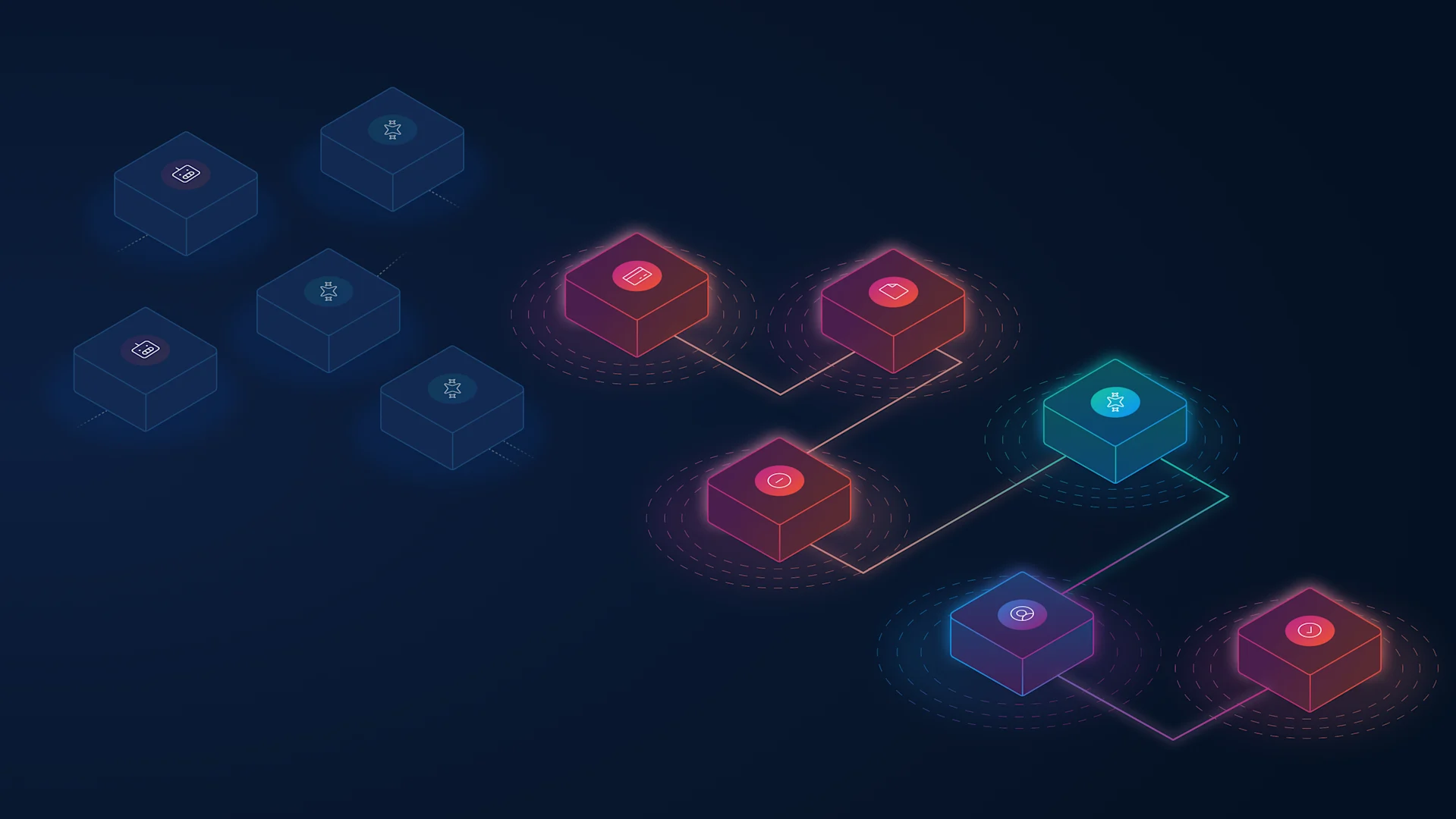
Think of your tech stack as a map, with each app representing a town on that map. Each location serves a specific purpose, like customer relationship management, or inventory. But without a robust infrastructure connecting them — as roads and bridges do — traffic jams, delays, and disconnected inefficiencies become the norm.
An orchestrator acts as that all-important infrastructure, enabling system integration and guaranteeing that applications work harmoniously connected within workflows, rather than in optimized isolation.
The absence of an orchestrator often manifests itself in several major pain points.
Siloed data, resources, and processes: Each application often maintains its own data stores and workflows, creating islands of information and dead ends that need to be picked up and completed again elsewhere. This leads to inconsistencies and a fragmented view of operations.
Complex integrations: Connecting applications becomes a monumental task, as point-to-point integrations form a brittle architecture that’s difficult to maintain.
Lack of visibility and control: Without a central vantage point, it’s almost impossible to track the end-to-end flow of business processes, while shadow processes abound.
Scalability challenges: Scaling individual applications on their own, tends to inversely run into limitations, without a way for your entire system to scale efficiently. A lack of coordination can lead to under-utilized, or over-provisioned infrastructure.
Increased costs: Every new application adds to the burden of development, testing, deployment, and maintenance. These cumulative costs can quickly outweigh the benefits as they fail to deliver to operational excellence as a whole.
With this segmented approach hindering end-to-end process automation and stifling innovation, a tech stack orchestrator brings new life and power to the use of individual apps. Rather than simply replacing your existing applications, an orchestrator augments them across the board.
It provides the digital glue that binds all applications together, creating a centralized platform to define, execute, and monitor complex workflows that span across multiple systems, making them work together by:
Integrating tools across your ecosystem
Enabling data flow between platforms to preserve customer context
Designing customer journeys that leverage insights from across your systems
Adopting a strategy like this means your business processes, from customer onboarding to supply chain management, can flow seamlessly from one application to another, without the need for human intervention or data re-entry. Process orchestration enables connecting streamlined workflows to elevate efficiency across the entire organization.
And here’s the cherry on top of the digital cake: Flowable understands these challenges intimately. Its platform is designed to infuse all the missing links in your stack with orchestration, offering robust end-to-end process design that both drives efficiency and empowers scalability.
Flowable empowers you to design intricate processes that intelligently integrate all your SaaS tools and operating systems, breaking down those notorious silos. It can handle large numbers of both processes and users efficiently: Take a customer order automatically triggering inventory checks, payment processing, and shipping notifications across various systems — all orchestrated through a guided workflow and navigable on a single platform.
Beyond simply integrating existing systems, Flowable puts you at the forefront of automated orchestration. We recognize that in an increasingly intelligent world, processes need to constantly adapt and evolve. This is where Flowable truly helps you to stand out from the crowd, with the strength of Flowable Agentic Case Platform.

Flowable Agentic Case Platform allows users to embed artificial intelligence directly into orchestrated workflows. The outcome? Your processes become smarter; Flowable assists workers by connecting data and communication from across platforms, automating information processing, making intelligent decisions and accelerated task resolution the driver of workflows.
For example, integrating AI providers with Flowable makes it possible to automatically categorize incoming customer queries, route them to the appropriate department, and even suggest optimal responses, all within a single orchestrated workflow. That’s ultimately what orchestration boils down to: it unlocks the full potential of your tech stack.
Without it, you're simply collecting apps and adding systems. With it, you're building a powerful, interconnected ecosystem that drives connected business value with IT process orchestration.
Flowable's open integration with systems and tools provides comprehensive capabilities to orchestrate your processes for smoother, more scalable operations, ensuring your tech stack is a well-oiled machine, not a collection of disconnected parts. Adopting more apps won’t solve integration issues. Orchestrating, on the other hand, will lead to a more efficient, resilient, and future-ready environment for your organization.
Business process management software covers very different tools in 2026. See how the category shifted towards BOAT and what buyers should evaluate.
Client lifecycle management in banking goes beyond onboarding. See how case management keeps client context intact through KYC, reviews and offboarding.
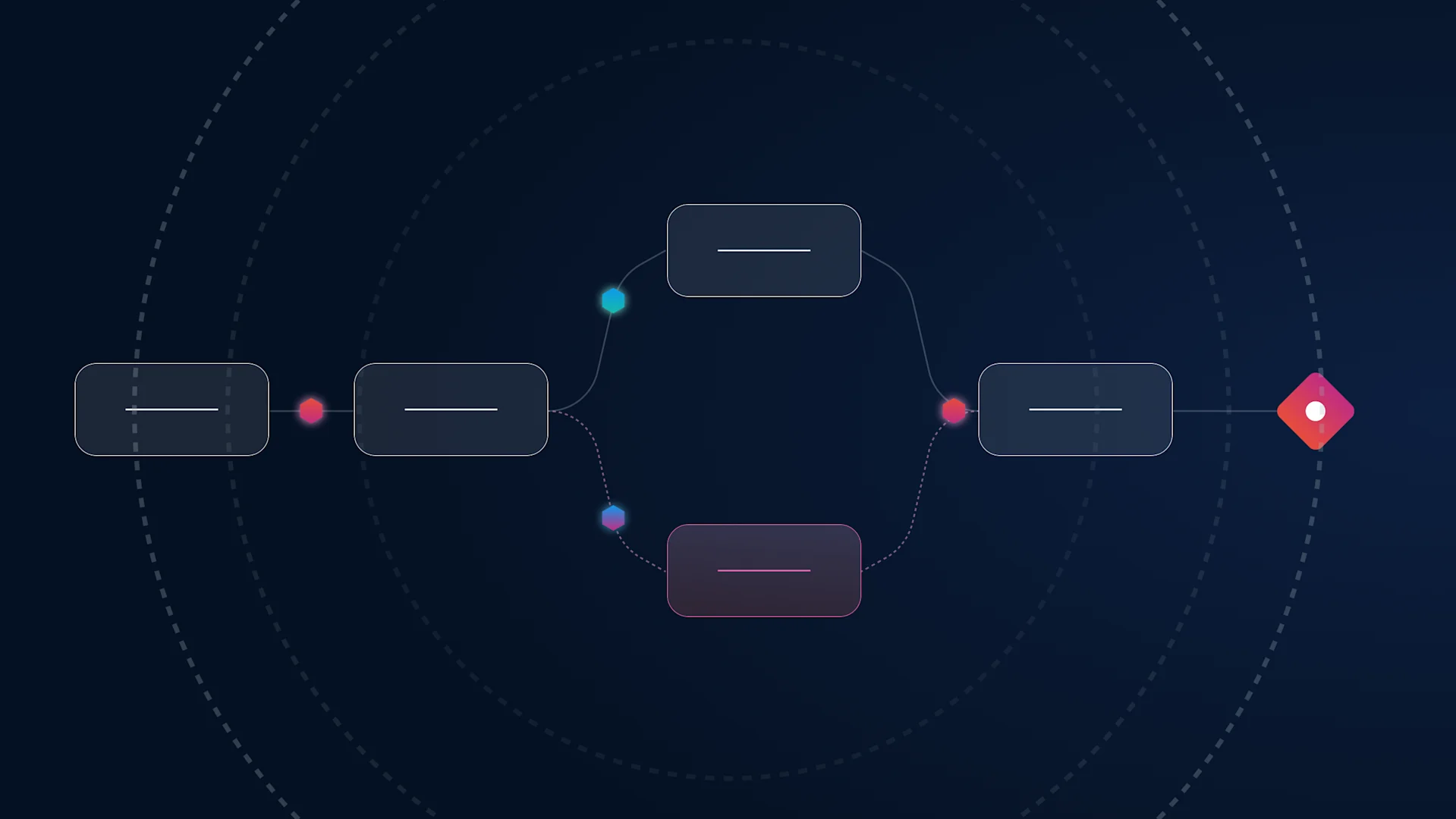
n agentic workflow is more than a multi-agent diagram. See what the standard patterns omit once workflows meet exceptions, oversight, and audit requirements. Primary keyword: agentic workflow