
Underwriting teams are caught between two competing pressures: increasing automation and the need to maintain strict risk control. Agents and customers expect faster, seamless experiences, but teams must still manage risk in one of the most regulated areas of insurance.
The most effective approach to automated insurance underwriting coordinates workflows, decision logic, AI-assisted evaluation, and human review within a single system.
This guide outlines a practical strategy for automation that supports both routine and complex cases without losing visibility or compliance.
Orchestrate, don’t just automate: Combine BPMN (process), DMN (decisions), and CMMN (cases) to handle both routine approvals and "messy" real-world exceptions.
Prioritize traceability: Build explainable logic into every workflow to ensure automated decisions are fully auditable and compliant.
Bridge AI and expertise: Use intelligent processing for data extraction while maintaining "human-in-the-loop" triggers for high-stakes or borderline risks.
Scale by complexity: Start implementation with standardized, high-volume product lines before expanding to nuanced commercial risks.
Automating insurance underwriting improves speed and consistency, but only when it’s designed to handle the unpredictable nature of complex risks. While some submissions move directly from application to decision, others change course when new information surfaces.
For straightforward policies, automation delivers immediate value. When data is complete and risk meets set criteria, applications move through checks, pricing, and approvals with minimal friction. For example, a standard auto insurance application with a clean record and valid Vehicle Identification Number (VIN) can go from submission to quote in seconds without human help. Challenges arise when a case becomes unpredictable.
Standard automation can struggle when a submission deviates from the expected path. If your workflow can’t handle exceptions such as missing information or data conflicts, it spills out of the automated system into manual email threads and shared folders. This results in reduced visibility and fragmented audit trails for underwriting and compliance teams.
A commercial property submission, for instance, might pass initial eligibility checks but trigger a referral once third-party data reveals the building is in a wildfire zone. Even a simple address mismatch between the application and a Dun & Bradstreet report can halt the process.
To prevent this disruption, underwriting automation must support several capabilities at once:
Underwriting automation has three main areas: process, decision, and case management.
Framework | What it handles | Role in underwriting automation |
BPMN (Process) | Structured, repeatable steps | Runs the end-to-end underwriting flow for predictable submissions, including intake, routing, pricing, and quoting |
DMN (Decision) | Rules and calculations | Evaluates eligibility, pricing logic, and other decisions wherever the workflow or case requires an answer |
CMMN (Case) | Exceptions and variability | Manages submissions that break from the standard path, including investigations, follow-ups, and human review |
The five types of underwriting automation below operate within the three frameworks above.
Rule-based automation is best for decisions where the criteria are clear and non-negotiable. It uses deterministic logic: “If X, then Y.” This layer handles processes such as eligibility checks, eligibility disqualifiers, and standard pricing rules.
For instance, a Decision Model and Notation (DMN) rule might state: "If Driver Age < 25 AND Vehicle Value > $80,000, THEN Decline." When an auditor asks why that specific policy was rejected, you can point to the exact table and row in the logic that triggered the decision.
Where rules handle clear-cut decisions, AI supports probability‑based risk assessment. Machine learning models analyze historical loss data to predict future risk, while large language models (LLMs) assist in digesting unstructured text.
For example, consider a submission with five years of loss runs attached as PDF images. Instead of an underwriter manually typing those numbers into a spreadsheet, an AI model reads the PDFs, classifies the loss types (e.g., "Water Damage" vs. "Slip and Fall"), and calculates the loss ratio automatically.
Not every submission is a simple “yes” or “no.” Some risks require investigation, follow-up, or human judgment before a decision can be made. This is where Case Management Model and Notation (CMMN) comes into play, allowing each submission to be treated as a dynamic case file rather than a fixed workflow.
If a submission is missing a key fire inspection report, the system doesn’t reject it. Instead, it keeps the case open, emails the broker for the document, and pauses the service level agreement (SLA) timer. When the broker provides the file, the system detects it and reactivates the task for the underwriter to review.
IDP sits at the intake point. It converts unstructured documents—emails, loss runs, medical records—into structured data that the system can use.
For instance, when an email arrives with an ACORD 125 form attached, IDP reads the "Business Description" field, extracts the FEIN, and maps the "Prior Carrier" information directly into the quoting engine, eliminating the need for a submission coordinator to manually key in the data.
This is the orchestration layer that ties each of the above technologies together. Hybrid orchestration relies on Business Process Model and Notation (BPMN) to run the end-to-end process and coordinate hand-offs between IDP (intake), DMN (decisioning), CMMN (exceptions), and human staff.
For example, BPMN workflow ensures that the data extracted from the ACORD form (IDP) triggers the correct eligibility rules (DMN). If those rules flag a high-risk factor, the system seamlessly creates a review task for a senior underwriter (CMMN), passing along all the context so they don't have to search for it.
Next, we’ll translate this stack into an implementation plan.
To implement underwriting automation, teams must define the product scope, set compliance and audit requirements, and create workflows that mix straight-through processing (STP) with exception handling and human review.
Start where the data is cleanest and the rules are clearest. Products with standardized applications and clearly defined rating inputs are usually the easiest place to begin. For example, commercial underwriting teams often start with small general liability products because risk factors like revenue, size, and location are straightforward to verify.
Define your guardrails before building the automation. In addition to static policy manuals, regulated carriers need systems that automatically enforce these controls by flagging AI hallucinations, preventing algorithmic bias, and maintaining strict explainability. You need an audit trail that records the exact rule or model version for every policy decision to make automated approvals or rejections fully defensible.
If you update your pricing model on June 1st, for instance, you must be able to prove that a policy quoted on May 31st used the old model, while a policy quoted on June 2nd used the new one. In practice, an orchestration platform achieves this by logging a permanent snapshot of the exact logic and tables applied at the exact moment of decision.
Map your workflow to the right technology standard to avoid friction:
BPMN for the predictable path of receiving, pricing, and quoting
CMMN for unpredictable exception handling and investigation loops
DMN for decisions, where rules and calculations are evaluated whenever the workflow or case needs an answer
Together, these standards ensure each part of the underwriting process is handled by the approach best suited to its level of predictability and change. The benefit is a system that remains efficient and auditable even when a submission deviates from the standard path. For example, you might use BPMN to move an application from intake to quote, calling a DMN table to calculate the premium, while using CMMN to manage any investigative detours if the data comes back incomplete.
Underwriting automation works best when integrated with core systems. The workflow should pull data from policy administration systems, rating engines, and third-party sources as part of the underwriting process. When a new submission arrives, the defined workflow should automatically retrieve required third-party data and surface it inside the underwriting view.
For example, the system can request a Comprehensive Loss Underwriting Exchange (CLUE) report for personal lines or a business credit report from providers like LexisNexis or Verisk and attach it directly to the submission.
If an AI agent has low confidence in document extraction, or if a risk score falls near an approval threshold, the workflow must automatically trigger a user task for a human underwriter to ensure that the final decision is accurate and defensible. This prevents uncertain cases from moving forward without review and keeps automation aligned with underwriting standards.
For instance, if an AI agent extracts a construction year that falls outside expected ranges on a property application, it should flag this as a potential anomaly by generating a review task directly in the underwriter’s queue for verification.
Monitoring doesn’t stop once the system goes live. Since risk environments and input data constantly change, underwriting automation requires continuous measurement of decision accuracy, data quality, exception handling, and human review rates. Teams use these measurement signals to refine rules, update thresholds, and rebalance human-in-the-loop workflows as risk patterns change.
For example, if your AI starts rejecting significantly more applications from a specific region than it did last month, you need to know. Built-in drift detection within your orchestration platform, such as Flowable AI Studio, should flag this change. Once alerted, teams can take action.
If the model is biased, IT can tighten the AI guardrails, or, if the risk profile has changed, they can update the DMN rules to reflect the changes. Once these six building blocks are in place, implementation shifts from automating individual tasks to orchestrating processes, decisions, cases, and people together. The next challenge is selecting a platform that can coordinate these workflows and handoffs within a single, governed system.
Flowable orchestrates underwriting workflows, decisions, and cases with enterprise-grade AI governance built to support the regulatory and compliance requirements of insurance carriers.
Built for real-world underwriting operations Underwriting isn’t linear. Submissions pause, branch, return, and escalate as new information appears. Flowable is designed to support that reality without breaking process continuity. With Flowable, underwriting teams can:
Run predictable underwriting paths using structured processes
Manage exceptions, investigations, and follow-ups within the same system
Evaluate eligibility, pricing, and routing decisions consistently across workflows and cases
Apply AI where it adds value, with defined guardrails and human oversight
All activity remains orchestrated inside a single execution layer, so work doesn’t fall out of the system when cases become complex.
Flowable runs processes, decisions, cases, and AI interactions in a single orchestration layer. Every action is logged, traceable, and auditable by default.
For insurance teams operating in regulated environments, this makes it possible to scale underwriting automation while maintaining transparency, explainability, and control.
To see how Flowable supports underwriting automation across structured workflows and complex cases, sign up for a free trial or schedule a product demo today.
Traditional underwriting relies on humans to manually review applications, evaluate risk, and calculate pricing. Automated underwriting uses software to perform these tasks instantly for qualifying risks. For example, a traditional process might take two days to quote a renter's policy, while an automated process does it in seconds.
AI improves underwriting by processing unstructured data faster than humans can. For instance, AI can read a 50‑page medical record summary, extract relevant conditions, and present them to the underwriter faster than manual review.
A core expectation is explainability backed by robust governance. Insurers must be able to trace why a specific decision was made to satisfy regulatory and internal audits. Beyond explainability, compliance also requires documented model validation, data quality controls, and fairness checks to ensure similar risks are treated consistently, and any disparities are identified and addressed.
Yes, but typically through "underwriting assistance" rather than full straight-through processing. For a complex fleet policy, automation might handle the vehicle schedule import and Motor Vehicle Record (MVR) checks, while the human underwriter makes the final judgment on the driver safety program.
Bias is managed through rigorous governance. This involves testing models against protected variables (like race or gender) before deployment and continuously monitoring live outcomes to ensure the system treats similar risks.
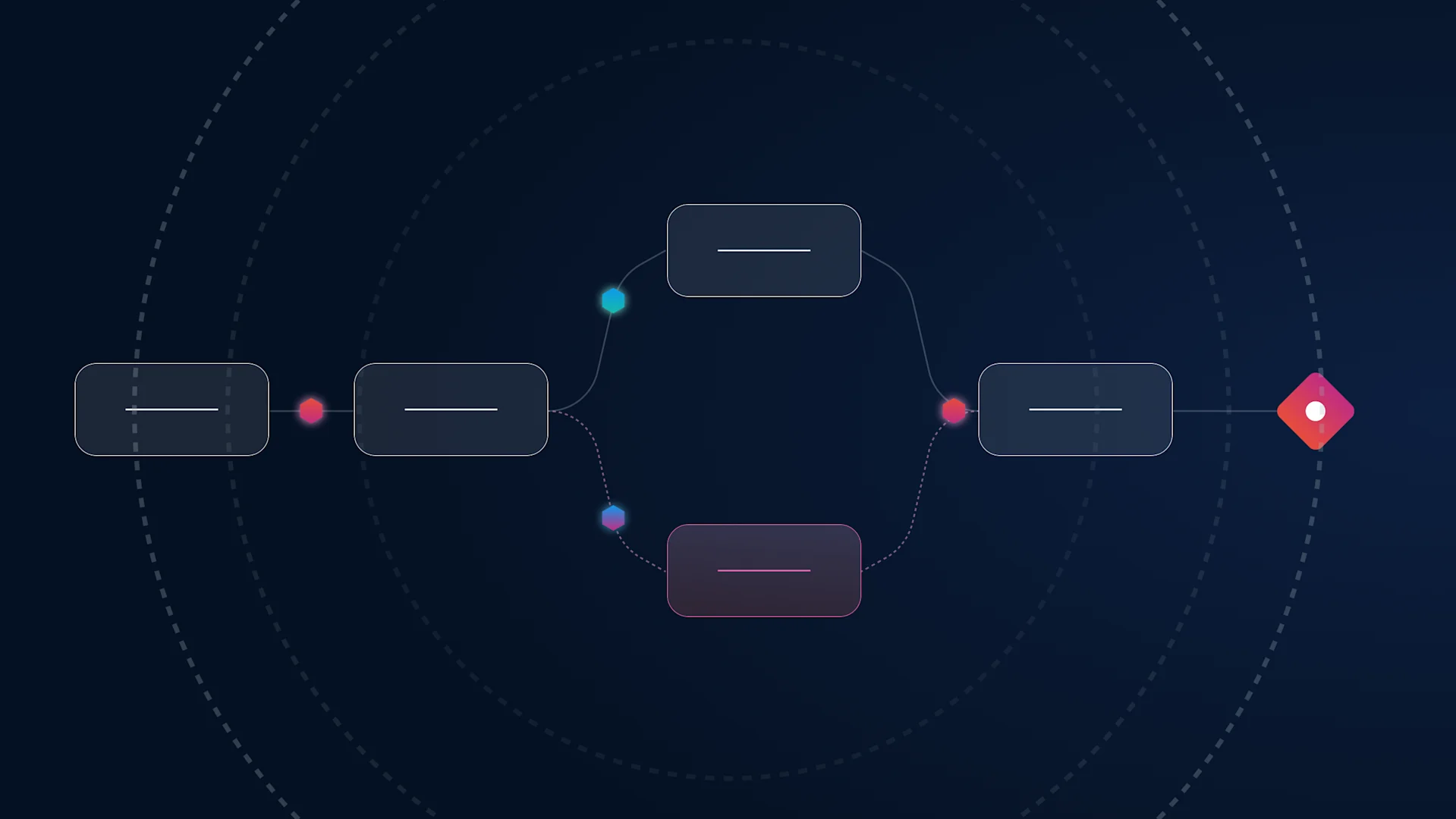
n agentic workflow is more than a multi-agent diagram. See what the standard patterns omit once workflows meet exceptions, oversight, and audit requirements. Primary keyword: agentic workflow
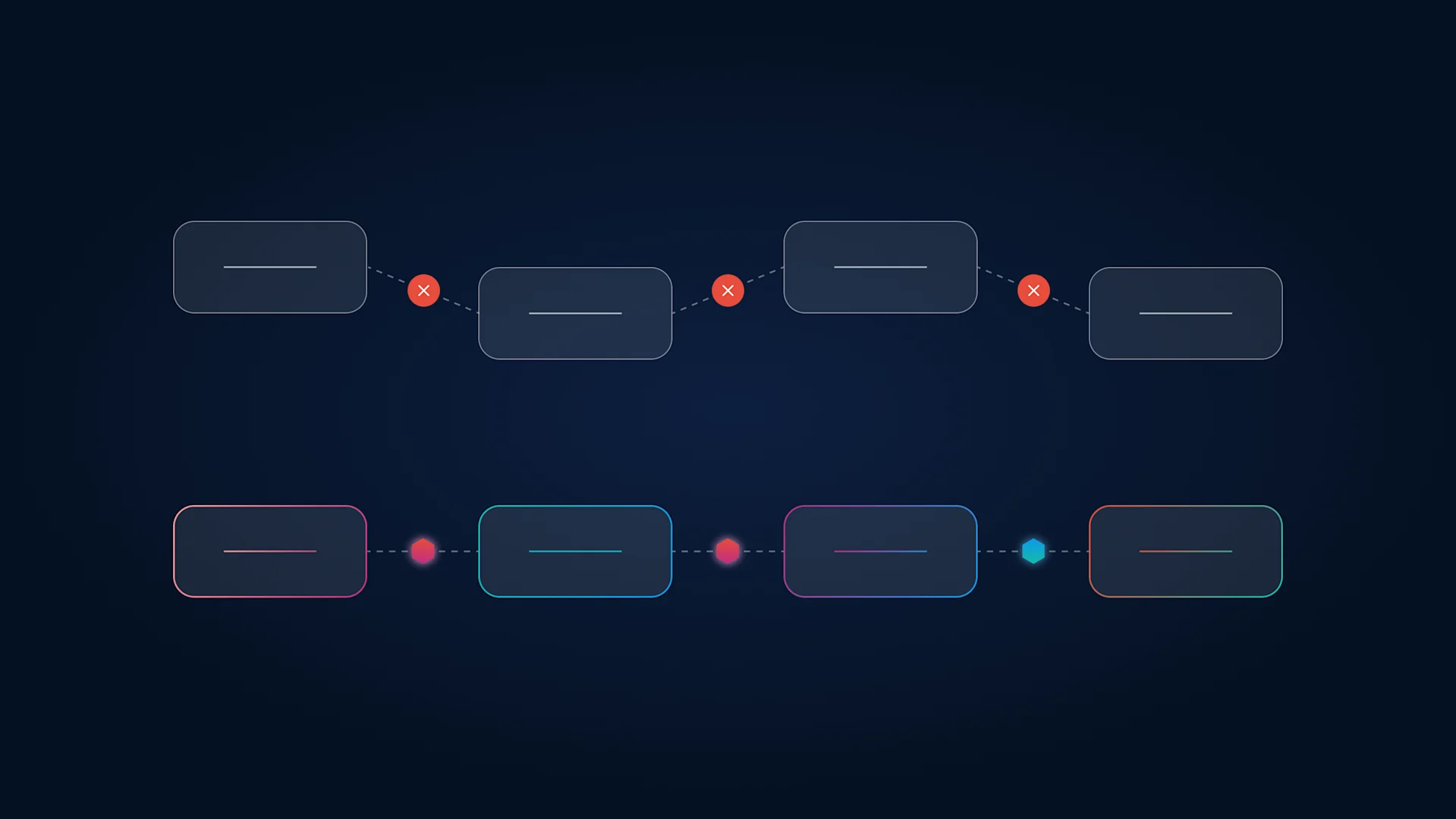
Automating single functions leaves the process broken at the handoffs. See why end-to-end orchestration beats function-by-function financial process automation.
A criteria-led framework for evaluating workflow orchestration tools, covering open standards, governance, exceptions, and lock-in, not another ranked listicle. Keywords: workflow orchestration tools