All Case Studies
Download Success Story
Download NowDaniel Utri and Simon Böckmann are responsible for defining workflows, integrating automation, and increasing process efficiency at T&A Systeme. As process manager and lead front-end developer, they work together closely to build intelligent company solutions. T&A Systeme is a leading IT service provider in Germany, specializing in software-defined networking (SD-WAN), data centers, and SMART Campus Solutions integration.
–
Managing thousands of contracts with over 700 network operators is a demanding task, even for an experienced telecommunications provider like us. To be able to offer customers reliable service at all times, we rely on high-quality data, processes, and operations.
However, recently as our customer base grew at speed, it quickly became clear that our existing project management tool was soon to reach a point where it would no longer be keeping up.
We needed a solution that not only allowed impactful operational changes but actively supported them.
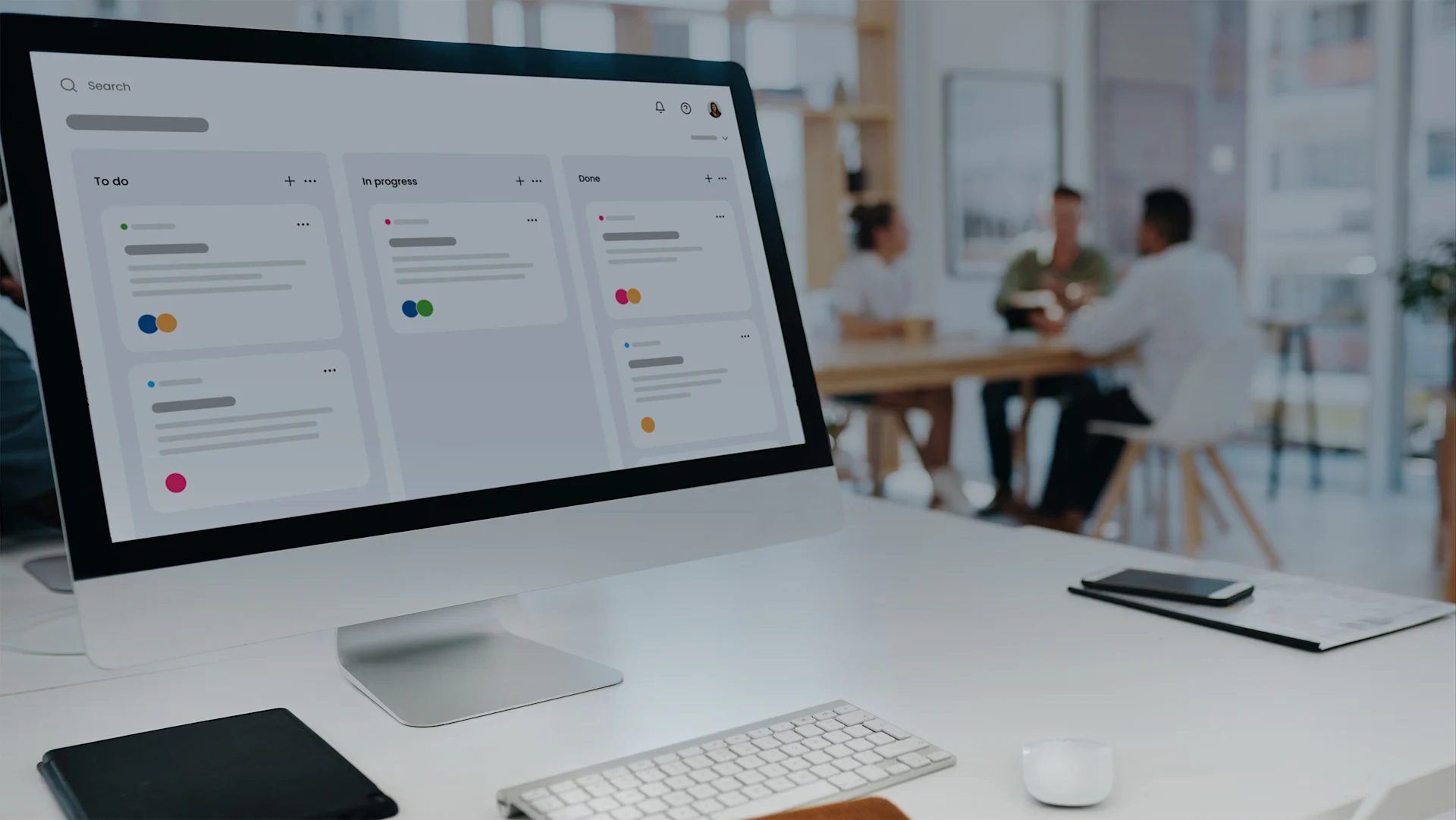
Over the years, as our tasks became increasingly complex, we significantly expanded our existing task-tracking tool. But we repeatedly encountered functional limitations we saw we’d need to be cautious of at scale — especially when entering and displaying large amounts of data. A simple Kanban board was no longer sufficient. We needed a solution that not only allowed impactful operational changes but actively supported them.
With rapid growth it was hard to ignore that a larger and larger part of our time was being spent on manual data entry — for example, with contract details, hardware deliveries, and customs clearances. We recognized these entries in purchasing processes required optimization for us to continuously be more efficient. In addition, structured workflows were missing and this too made scaling our processes difficult.
We weren’t surprised when an analysis of our processes showed substantial time could be saved across teams and tasks. Directly after presenting the forecast to management, it was agreed: automation was now the logical next step.
We needed two main things: reduced manual work, and higher data quality. Before automating, we performed many individual tasks repeatedly. And as repetitive manual workload scales: automation’s potential increases significantly.
We weren’t surprised when an analysis of our processes showed substantial time could be saved across teams and tasks. Directly after presenting the forecast to management, it was agreed: automation was now the logical next step.
Instead of completely replacing our existing task-tracking tool, we opted for a hybrid approach to automation with the Flowable Case Platform. This allowed us to maintain our existing workflows and user interfaces — and to power them with standardized structured processes and automation.
Today, our task management tool is integrated with Flowable. And task automation runs inconspicuously and effectively in the background, driving efficiency and ensuring more reliable task management.
This allowed us to maintain our existing workflows and user interfaces — and to power them with standardized structured processes and automation.
Our first priority, to improve data validation, was quickly achieved with Flowable. Mandatory fields, character limits, and duplicate checks for example, now ensure clean, centrally available data.
Building on this, we introduced standardized workflows. Processes now run in the optimal sequence, and we have further reduced the potential for errors and inconsistencies. Onboarding new employees is also significantly more efficient today — as they benefit from guided processes and clearer structures from day one.
Starting with automation presents some challenges. We may have even gone live a bit too early with some functions. But with ongoing optimization and expert support, we constantly improved our processes. Today, we have a scalable automation framework that continues to increase our efficiency and create room for innovation.
The positive effects of automation were immediately noticeable, and the project is ongoing at speed. Processes that previously required manual entries are now optimized — where duplicate work and much back-and-forth have been reduced. And recurring tasks are automated, allowing our teams to streamline their work and focus.
Thanks to better visibility of workflows, problems can be identified more quickly and resolved in a targeted manner, which was an important step to improving sustainable scalability and effectiveness.

by reducing repetitive tasks, allowing for more focus, and value-adding work
allowing us to track progress in real-time, and identify specific points of potential for automation, support, and improvement.
with an automation platform in place, the opportunity to transition to a new, improved way of working is now available to departments across the business.
The success of this project has triggered an automation boost throughout the company. Teams initially hesitant about digital solutions are now actively contributing their own ideas because they see how much easier, faster, and more reliable automated processes run with Flowable.
The next major milestone is the integration of our helpdesk system. This will centralize our customer support and create a modern, scalable solution, and is attracting lots of attention throughout T&A Systeme.
Teams initially hesitant about digital solutions are now actively contributing their own ideas because they see how much easier, faster, and more reliable automated processes run with Flowable.
Hardware shipping and customs clearance are also undergoing the next big change: what was previously time-consuming, and manual will soon be even more efficiently, traceably, and securely optimized with Flowable.
With the platform’s flexibility and intuitive low-code tools, we’re continuously expanding our automation strategy. What began with the optimization of a simple Kanban board is developing into a profound transformation. And this is just the beginning.
Process Manager
T&A Systeme
As Process Manager at T&A Systeme, Daniel Utri is responsible for the analysis, optimization, and definition of business processes. He leads initiatives to streamline complex processes, identifies areas for automation, and implements strategies to reduce manual effort. In doing so, he ensures improved data quality and scalable workflows within the company.
Lead Front-End Developer
T&A Systeme
As Lead Front-End Developer at T&A Systeme, Simon Böckmann drives the design and implementation of user interfaces for the company's digital solutions. His expertise includes translating business requirements and design concepts into functional, intuitive web applications, and ensuring a frictionless and efficient user experience for automated tools and systems.

Flowable for Manufacturing - increasing transparency in supply chain management. Read the full success story.

Consolidation of 14 disparate systems into one unified view accelerates product development while improving customer experience at award-winning insurer.

Flowable for Banking - Low-code and intelligent automation speeds up digitalization and adaption of loan processes during the Covid outbreak.