
In our previous blog post, we learned how to measure model complexity. In this post, we explore how FlowComplexity can help us put theory into practice.
FlowComplexity is a standalone tool designed to evaluate the complexity of BPMN and CMMN models created in Flowable. It can be downloaded from the Tools section on the Flowable trial account page. Simply sign up for a free trial — no strings attached.
After signing in, you'll gain access to a variety of resources to begin your learning journey with Flowable. In the Tools section, alongside other utilities like Flowable Leap, you'll find FlowComplexity available for download. Just download the tool, extract the contents, and follow the instructions in the included README file to start analyzing your workflows.
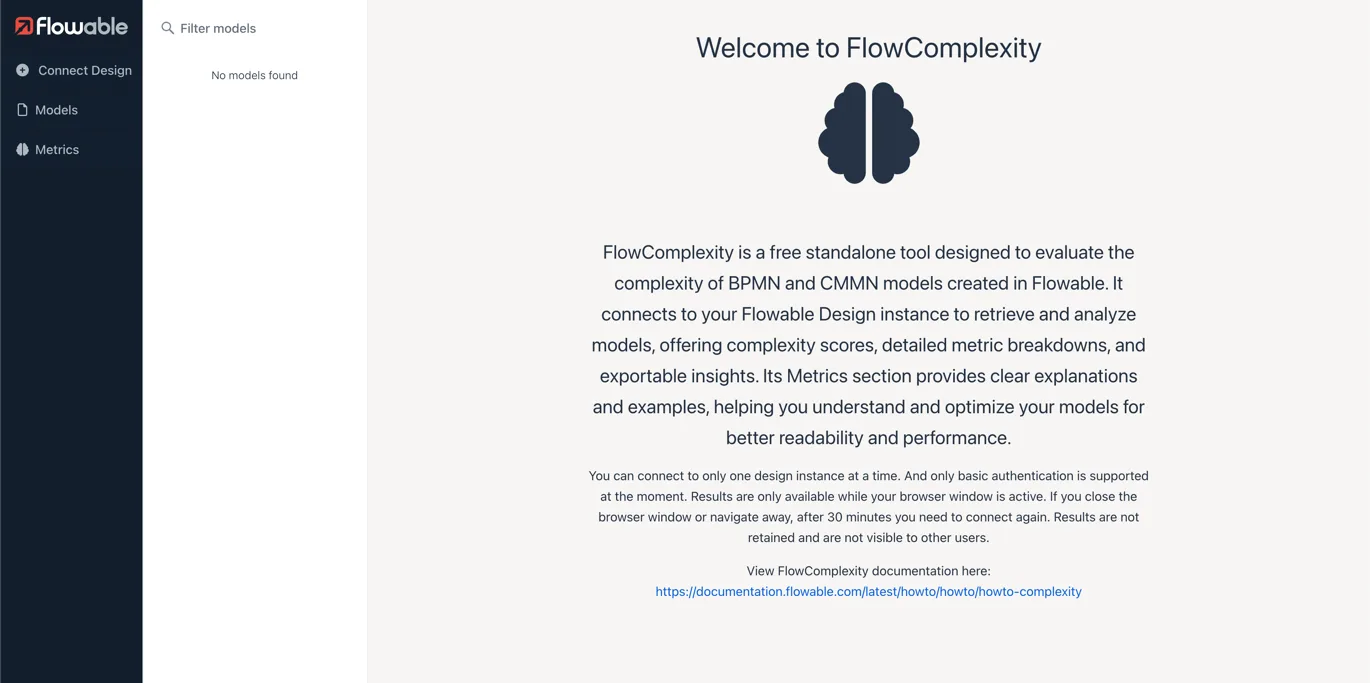

Figure 1: FlowComplexity Main Page
The tool requires access to your Flowable Design instance to fetch and analyze models. To begin, click on "Connect Design" and enter the necessary credentials, as illustrated here:
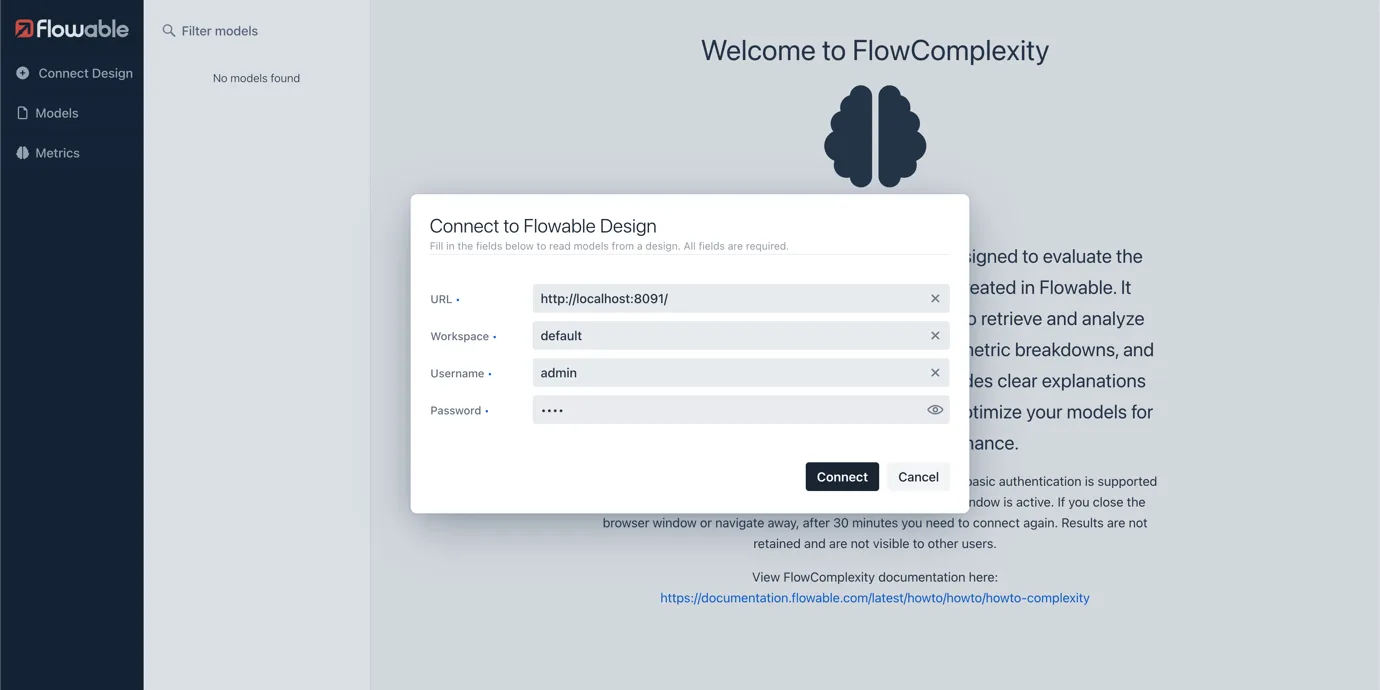
Figure 2: Connect to Flowable Design
Once the analysis is complete, the tool displays a comprehensive list of models retrieved from Flowable Design, along with their respective complexity scores and a breakdown of the metrics that contribute to their complexity.
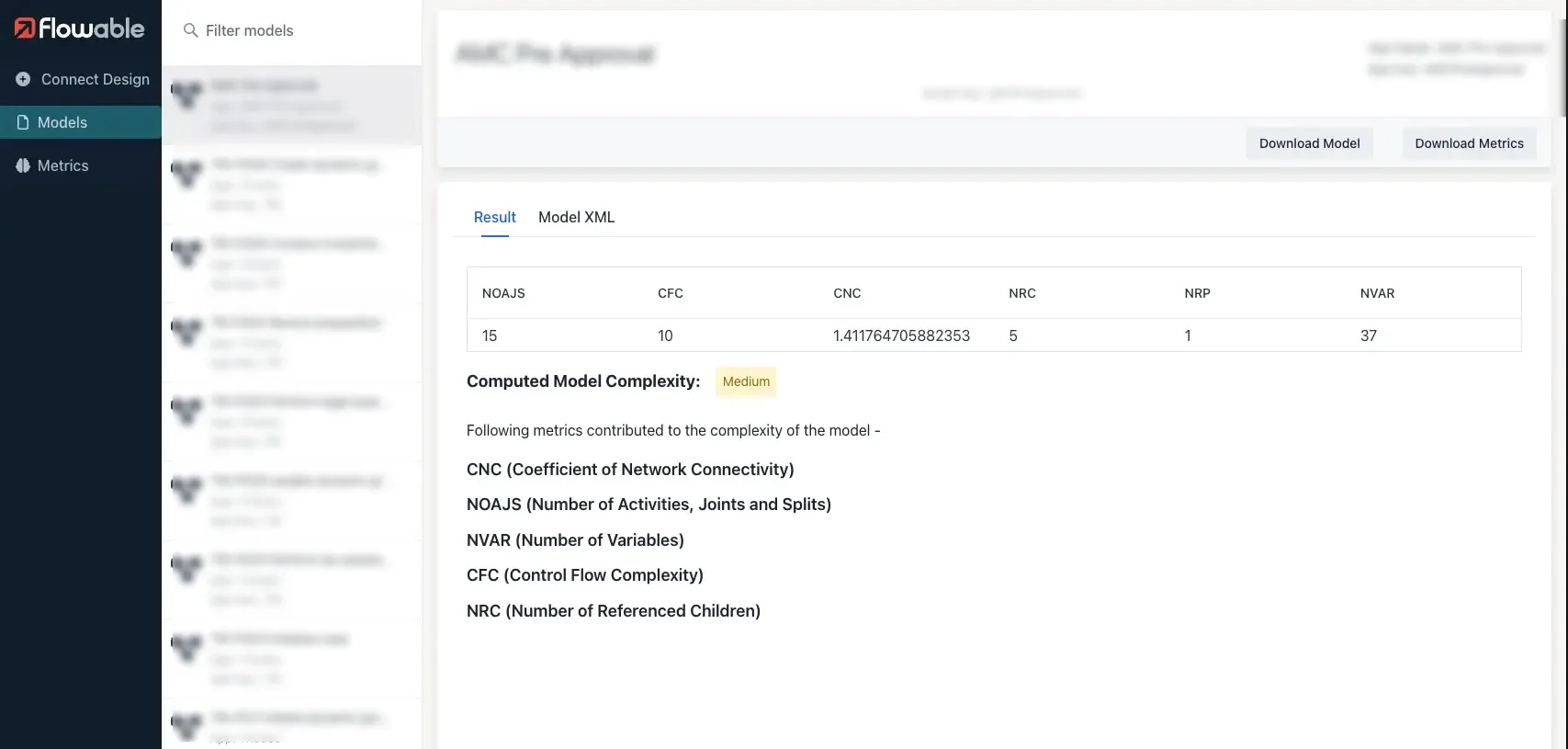
Figure 3: Model complexity breakdown
You can easily download the analyzed models or their associated metrics for further review.
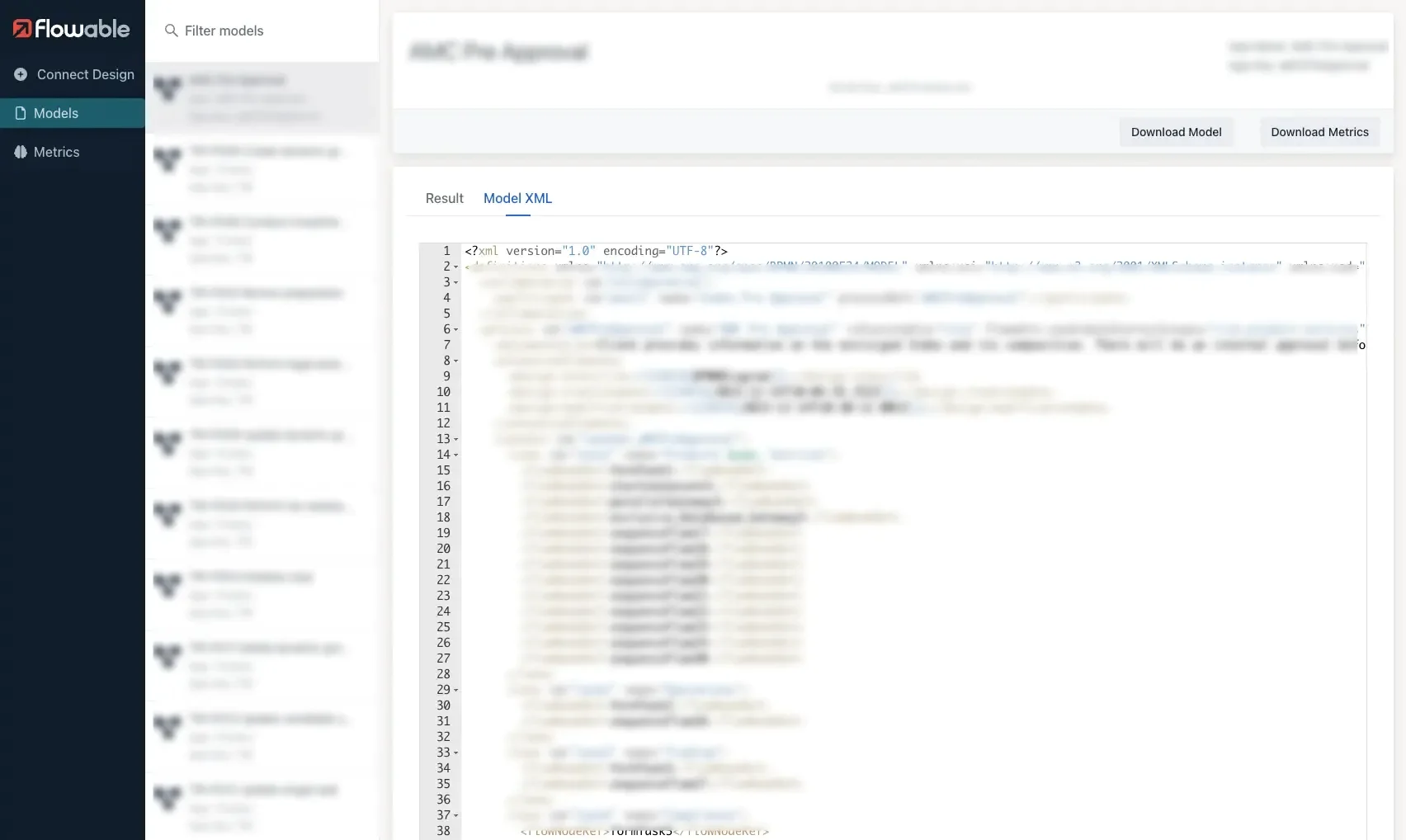
Figure 4: Model XML
Additionally, the tool includes a dedicated "Metrics" section, providing detailed explanations and examples of all the complexity metrics for better understanding.
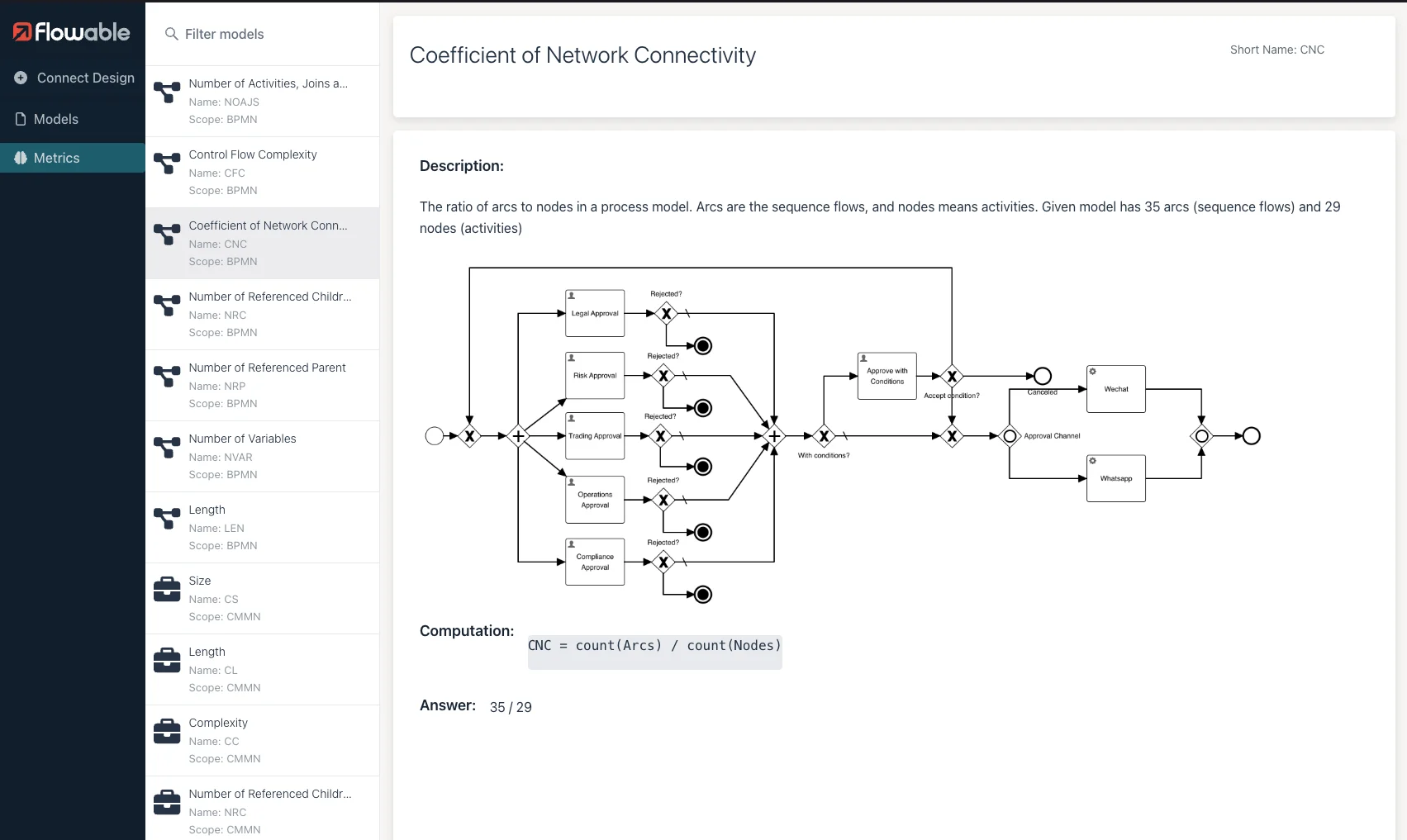
Figure 5: Metrics overview
To conclude this series, we’ve explored the journey from understanding workflow complexity to building a comprehensive tool that evaluates and classifies models based on measurable metrics. These efforts aim to provide actionable insights, transforming raw data into meaningful guidance for workflow optimization. However, the true potential of complexity analysis lies not just in evaluation but in how these insights can be practically applied to enhance workflow design and execution. So what's next?
The complexity analyzer serves as a valuable tool for modelers seeking to assess and improve both the readability and maintainability of designed models. Making this tool openly accessible empowers the modeling community to leverage data-driven insights for enhanced model design.
Augmenting the modeling environment with real-time suggestions based on complexity analysis can aid modelers in creating more efficient and maintainable workflows. Imagine having the “AI Assistance” in design , which when you add gateway conditions for taking decision will smartly suggest to use decision task, or replacing your service tasks with new and improved service registry tasks.
By integrating complexity analysis with runtime information, organizations can gain holistic insights into model performance and resource utilization. And this integration facilitates proactive model optimization that promotes more efficient workflow execution at design stages. As we look to the future, the Complexity Analyzer has the potential to evolve in several exciting directions to help solidify its role as a crucial component in modern workflow management.
Let us know your thoughts about the tool. We are happy to hear your feedback.

Flowable Solutions Architect
Prathamesh is a Solutions Architect at Flowable, helping customers design, implement, and optimize intelligent automation solutions. With deep expertise in BPMN, CMMN, and DMN, he bridges technical complexity with practical value ensuring Flowable delivers where it matters most.
prathamesh.mane@flowable.com

Tools like ChatGPT can handle a variety of business tasks, automating nearly everything. And it’s true, GenAI really can do a wide range of tasks that humans do currently. Why not let business users work directly with AI then? And what about Agentic AI?

In this post, we continue our exploration of workflow complexity - learn how key metrics like activity count and control flow reveal natural groupings of models, making it easier to identify and improve overly complex designs.

Simplifying process models boosts clarity and maintainability. This post explores how to identify and reduce model complexity using real-world examples and metrics, laying the groundwork for building a practical complexity analyser.